
Battery Operated Electromagnetic Flow Meter
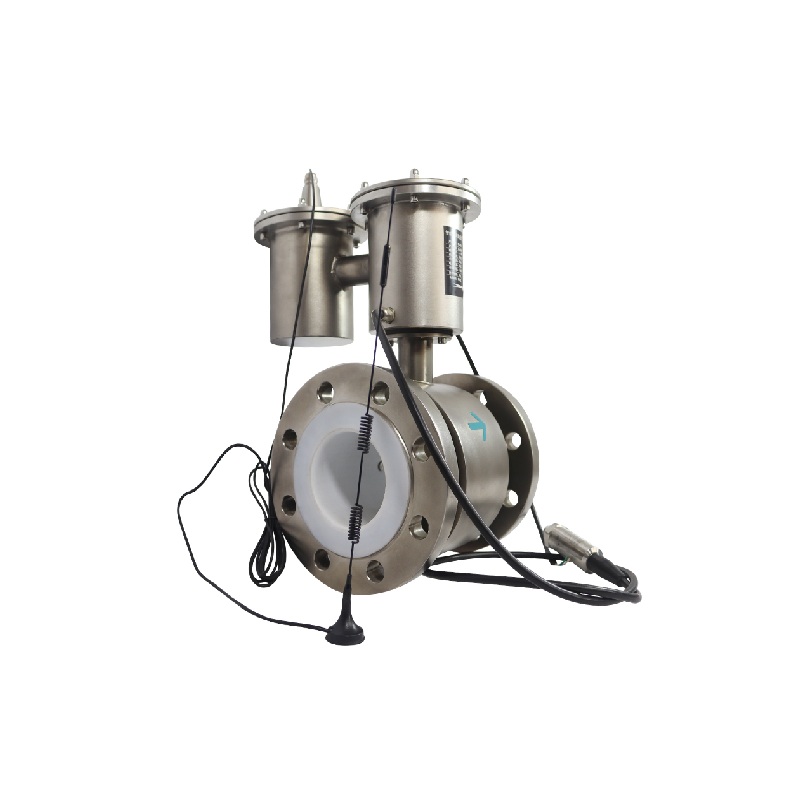
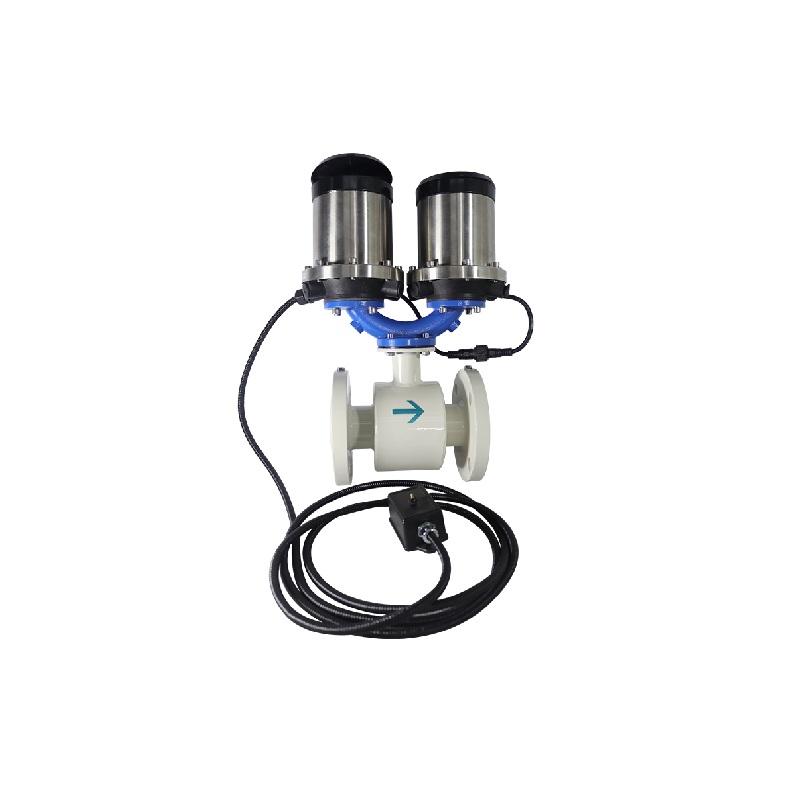
Product Description
✓ IP65 / IP67 Protection · ✓ Explosion-proof ExdIIa / ExdII CT6 Gb · ✓ No External Power Required
Pipe Size: DN15 – DN300
Accuracy: ±0.5%
Flow Velocity: 0.05 – 10 m/s
Working Pressure: PN10 / PN16
Medium Temp: 0°C to +80°C
Conductivity: ≥ 5 µS/cm
Output: Pulse | GSM / GPRS Wireless
Data Log: 1,000 Groups (Settable Interval)
Lead Time: 7–14 days · MOQ: 1 Unit
Engineer replies within 24 hours · Free technical consultation
Technical Specifications
Performance
| Parameter | Specification |
|---|---|
| Measurement Principle | Faraday’s law of electromagnetic induction |
| Nominal Diameter | DN15 – DN300 |
| Accuracy | ±0.5% of actual flow rate |
| Flow Velocity Range | 0.05 – 10 m/s |
| Turndown Ratio | 150:1 |
| Applicable Media | Conductive liquids (conductivity ≥ 5 µS/cm) |
| Dielectric Conductivity | ≥ 5 µS/cm |
Power & Communication
| Parameter | Specification |
|---|---|
| Power Supply | 5 × 3.6 V lithium batteries — continuous operation 5–10 years, easy field replacement |
| Output Signal | Pulse output · GSM / GPRS wireless data remote transmission |
| Data Storage | 1,000 groups of flow data — settable interval, field-queryable |
| Display | LCD — instantaneous flow rate, flow velocity, forward/reverse cumulative totals, alarm prompts |
Mechanical & Environmental
| Parameter | Specification |
|---|---|
| Working Pressure | PN10 / PN16 |
| Medium Temperature | 0°C to +80°C (liner material dependent) |
| Ambient Temperature | -20°C to +70°C |
| Protection Class | IP65 / IP67 |
| Explosion-proof Grade | ExdIIa · ExdII CT6 Gb |
| Structure Type | Integrated (compact) / Split (remote converter) |
| Process Connection | Flange / Thread / Clamp |
| No Moving Parts | Zero internal obstructions — negligible pressure loss |
Why a Battery Operated Electromagnetic Flow Meter?
A battery operated electromagnetic flow meter — also called a battery powered mag flow meter or wireless electromagnetic flow meter — solves one fundamental problem: how do you measure flow accurately when there is no power supply at the installation point?
Three conditions make the battery operated variant the correct choice over a standard mains-powered electromagnetic flow meter:
- Remote water supply and irrigation systems — Agricultural canals, rural water distribution networks, and remote pumping stations are rarely wired for 220 VAC. Running power cables to each measurement point is expensive and impractical. Battery operation eliminates that cost entirely.
- Urban water supply metering and district metering areas (DMAs) — Municipal water utilities use battery operated electromagnetic flow meters at district boundary points where power is unavailable. GSM/GPRS wireless transmission sends real-time flow data directly to the SCADA or billing system without any wired infrastructure.
- Wastewater treatment and sewage monitoring — Lift stations, outfall monitoring points, and temporary bypass measurements often lack permanent power. A battery life of 5–10 years means the meter can be installed, commissioned, and left to operate through multiple maintenance cycles without battery service.
The key advantage over a battery-powered turbine or vortex meter is that the electromagnetic principle has no moving parts. Nothing to clog in wastewater. Nothing to erode in water with suspended solids. The measuring tube is completely open — the same bore as the connecting pipe.
Designed specifically for sewage treatment, water conservancy projects, urban water supply, and any application where AC power is unavailable or impractical. Five 3.6 V lithium batteries deliver 5–10 years of continuous operation with zero external wiring.
Typical Applications
🔧 Municipal Water Supply — District Metering Areas (DMAs)
The Problem: Water utilities need flow measurement at distribution network boundary points to detect leakage and balance supply. These locations are typically underground valve chambers with no power supply. Installing mains power at each point multiplies project cost significantly.
Why This Meter: The battery operated electromagnetic flow meter installs directly into the pipe with no external power connection. GSM/GPRS wireless transmission sends instantaneous flow, cumulative totals, and alarm data to the utility’s central management system. Five-year battery life aligns with standard AMR meter replacement cycles. No cables to maintain, no junction boxes, no power supply failures.
Key Advantage: Built-in forward and reverse totalizers detect backflow events automatically. Alarm prompt on the LCD triggers a remote alert via wireless transmission.
🔧 Wastewater Treatment — Lift Stations & Outfall Monitoring
The Problem: Sewage lift stations and wastewater outfall monitoring points need reliable flow measurement for regulatory compliance and process control. Many such locations are remote, unmanned, and without stable power supply. Wastewater contains suspended solids and fibrous material that blocks mechanical meters rapidly.
Why This Meter: The full-bore electromagnetic design has zero internal obstructions — no turbine blades, no floats, no orifice plates to clog. The conductive liquid requirement (≥ 5 µS/cm) is met by virtually all municipal wastewater streams. IP65/IP67 protection handles the wet, corrosive environment of a lift station wet well.
🔧 Agricultural Irrigation — Remote Canal Metering
The Problem: Irrigation water allocation systems require individual farm or district measurement. Field installations have no access to power. Solar panels are an option but add cost, maintenance, and theft risk.
Why This Meter: Battery operation with a 5–10 year service life covers the useful life of most irrigation infrastructure projects without battery replacement. The 1,000-group data logger stores daily totalized readings locally — the operator reads the meter quarterly, or GSM transmission delivers data automatically to water authority billing systems.
How It Works
The battery operated electromagnetic flow meter operates on Faraday’s law of electromagnetic induction — the same measurement principle as a standard mains-powered mag meter, but optimized for ultra-low power consumption:
- Two magnetic coils inside the meter body generate an alternating magnetic field perpendicular to the flow direction
- As the conductive liquid flows through this field, an electromotive force (EMF) is induced — proportional to flow velocity
- Two electrodes on opposite sides of the pipe wall detect this induced voltage signal
- The low-power converter processes the signal and updates the LCD display — showing instantaneous flow rate, flow velocity, and cumulative totals
- At the configured transmission interval, the converter sends data wirelessly via GSM/GPRS to a remote management system, or stores it locally in the 1,000-group data log
The micro-power consumption design is what makes 5–10 year battery life possible. The excitation frequency and duty cycle are optimized to minimize current draw while maintaining ±0.5% measurement accuracy. For a full technical explanation of the electromagnetic measurement principle, see: Magnetic Flow Meter: How It Works & Selection Guide.
Integrated vs. Split Converter
| Type | Description | Best For |
|---|---|---|
| Integrated | Converter mounted directly on sensor body | Accessible dry locations; ambient temperature within -20°C to +70°C |
| Split | Converter connected by cable, mounted remotely | Submerged installations, high-vibration locations, or where the display must be accessible above ground |
Can We Meet Your Requirements?
| Requirement | Capability | Status |
|---|---|---|
| No external power supply | 5 × 3.6 V lithium batteries, 5–10 year life | ✅ Standard |
| Pipe size DN15–DN300 | Full range available | ✅ Standard |
| GSM / GPRS wireless transmission | Built-in wireless module option | ✅ Standard |
| Pulse output for external totalizer | Standard pulse output | ✅ Standard |
| Local data logging | 1,000-group data logger, settable interval | ✅ Standard |
| Accuracy ±0.5% | Standard configuration | ✅ Standard |
| Wastewater / sewage media | Conductivity ≥ 5 µS/cm — met by municipal wastewater | ✅ Standard |
| IP65 / IP67 protection | Standard protection rating | ✅ Standard |
| Explosion-proof | ExdIIa / ExdII CT6 Gb rated | ✅ Available |
| Split converter type | For submerged or high-vibration sensor locations | ✅ Available |
| Forward + reverse flow measurement | Three built-in totalizers: forward, reverse, net | ✅ Standard |
| Working pressure above PN16 | Standard model rated PN10 / PN16 — higher pressure requires high-pressure model | → See high-pressure EMF |
| Non-conductive liquids | Electromagnetic principle requires conductivity ≥ 5 µS/cm | ❌ Not suitable |
| Gas or steam measurement | Electromagnetic principle requires conductive liquid | ❌ Not suitable |
Our Capabilities & Boundaries
WHAT WE DO:
- Battery operated electromagnetic flow measurement for conductive liquids — municipal water, wastewater, sewage, irrigation water
- DN15 to DN300 pipe sizes with no external power supply required
- GSM/GPRS wireless data transmission to SCADA, AMR, or billing systems
- 1,000-group local data logger with field-readable memory and settable recording interval
- Integrated and split converter configurations for above-ground and submerged installations
- Explosion-proof versions for classified hazardous locations
WHAT WE DON’T DO:
- Gas, steam, or non-conductive fluid measurement → Use our vortex flow meter for steam/gas
- High-pressure applications above PN16 → See our high pressure electromagnetic flow meter
- Large-diameter insertion measurement above DN300 → See our insertion type electromagnetic flow meter
- Open-channel or non-full-pipe flow → Requires different measurement technology
Ordering Information
| Item | Details |
|---|---|
| MOQ | 1 unit |
| Standard Lead Time | 7–14 working days |
| Rush Order | Available — contact sales with your timeline |
| Payment Terms | T/T |
| Warranty | 12 months from shipment date |
| Packaging | Export wooden crate, ISPM 15 compliant |
| Included Documentation | Factory calibration certificate · Test report with actual measurement data · Operation manual |
| Configuration Required | Pipe diameter (DN) · Working pressure · Structure type (integrated / split) · Output type (pulse / GSM) · Connection type |
Frequently Asked Questions
How long does the battery last in a battery operated electromagnetic flow meter?
Our battery operated electromagnetic flow meter uses five 3.6 V lithium batteries with a continuous operating life of 5 to 10 years, depending on the measurement interval, wireless transmission frequency, and display update rate. The micro-power consumption design minimizes current draw during measurement cycles. Batteries are field-replaceable without special tools. When the battery voltage drops below the operating threshold, the LCD displays a low-battery alarm prompt and the GSM module can send an alert to the remote management system.
What is the minimum conductivity required for this flow meter to work?
The battery operated electromagnetic flow meter requires a minimum liquid conductivity of ≥ 5 µS/cm. This is met by virtually all municipal tap water (typically 100–500 µS/cm), wastewater (200–2,000 µS/cm), sewage, and most irrigation water sources. It is not suitable for purified water, deionized water, or non-conductive liquids such as oils and hydrocarbons. If you are unsure about your liquid’s conductivity, our engineering team can advise based on your media description.
Does this meter support wireless data transmission?
Yes. The battery operated electromagnetic flow meter supports GSM / GPRS wireless data remote transmission. Flow data — including instantaneous flow rate, cumulative totals, and alarm status — is transmitted at configurable intervals to a remote management system, SCADA platform, or AMR billing server. In areas without GSM coverage, the built-in 1,000-group data logger stores records locally for manual readout or periodic upload. Pulse output is also available for connection to external totalizers or PLCs.
What is the difference between a battery operated electromagnetic flow meter and a standard electromagnetic flow meter?
The measurement principle is identical — both use Faraday’s law of electromagnetic induction. The key differences are: (1) Power supply — battery operated uses internal lithium batteries; standard requires 220 VAC or 24 VDC external supply. (2) Output options — battery operated prioritizes pulse output and GSM/GPRS wireless; standard models offer a full range of 4–20 mA, RS485, HART, and digital communication options. (3) Power consumption — battery operated uses a micro-power excitation circuit that sacrifices some signal-processing speed to achieve multi-year battery life. For applications with reliable power supply and advanced process integration needs, the standard electromagnetic flow meter is the better choice.
Can this meter measure bidirectional flow?
Yes. The battery operated electromagnetic flow meter has three built-in totalizers: forward total, reverse total, and net difference total. It displays both forward and reverse flow on the LCD and includes alarm prompts for reverse flow events. This makes it suitable for distribution network loss detection, where reverse flow indicates a network fault or illegal connection.
What pipe sizes and connection types are available?
The battery operated electromagnetic flow meter is available in DN15 to DN300 nominal diameters with flange, thread, or clamp connection types. For larger pipe sizes (DN300 and above) requiring flow measurement without power supply, please contact us to discuss insertion-type options or custom configurations. For high-pressure applications, see our high pressure electromagnetic flow meter (rated to 42 MPa).
Get Your Custom Quote in 24 Hours
At Soaring Instrument, we manufacture electromagnetic flow meters for standard, high-pressure, battery-operated, and insertion applications. Tell us your pipe size, media type, installation environment, and wireless transmission requirements — our engineering team responds with a technical recommendation and pricing within 24 hours.
- 📧 [email protected]
- 📞 0086-13585991410
- 🌐 Contact Us Online
Please include: pipe diameter (DN) · media type · working pressure · installation environment · required output / communication type
What Happens After You Submit?
- Step 1: Engineer reviews your application and replies within 24 hours
- Step 2: Free technical consultation — confirm pipe size, battery life requirements, wireless transmission setup, and structure type
- Step 3: Detailed proposal with pricing in 3 business days