
High Pressure Type Electromagnetic Flow Meter
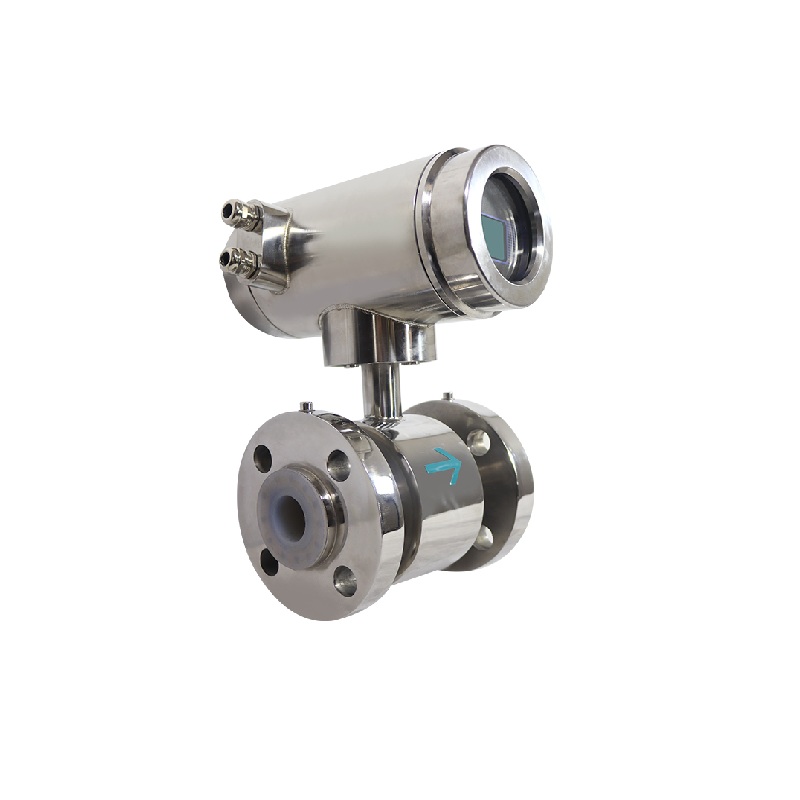
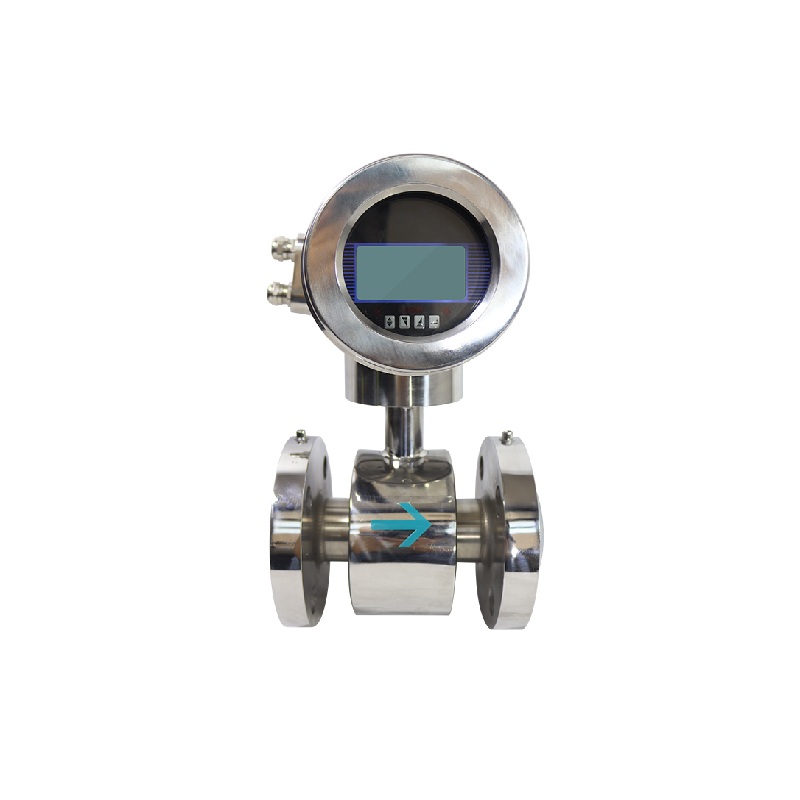
Product Description
✓ IP65 / IP68 Protection · ✓ Flange / Thread / Clamp Connection
Accuracy: ±0.5% (±0.3% / ±0.2% optional)
Pipe Size: DN25 – DN250
Medium Temp: -40°C to +180°C
Lining: PTFE / F46 / PFA
Electrodes: SUS316, Hastelloy B/C, Titanium, WC-coated
Output: 4–20 mA | RS485 / HART | Pulse
Lead Time: 7–14 days · MOQ: 1 Unit
Engineer replies within 24 hours · Free technical consultation
Technical Specifications
Performance
| Parameter | Specification |
|---|---|
| Measurement Principle | Faraday’s law of electromagnetic induction |
| Nominal Diameter | DN25 – DN250 |
| Nominal Pressure | 6.3 MPa / 10 MPa / 16 MPa / 25 MPa / 42 MPa (selectable) |
| Accuracy | ±0.5% (standard) / ±0.3% / ±0.2% (optional) |
| Flow Velocity Range | 0.1 – 15 m/s |
| Turndown Ratio | 150:1 |
| Responding Speed | ≤ 1 s |
| Applicable Media | Conductive liquid or liquid-solid two-phase media (conductivity ≥ 20 µS/cm) |
| Medium Temperature | -40°C to +180°C |
| Ambient Temperature | -10°C to +60°C |
| Dielectric Conductivity | ≥ 20 µS/cm |
Materials
| Component | Options |
|---|---|
| Lining Material | PTFE / F46 / PFA (high-pressure abrasion resistant) |
| Electrode Material | SUS316 · Hastelloy B · Hastelloy C · Titanium · Stainless Steel Coated Tungsten Carbide |
| Body / Pipe Material | Carbon steel / Stainless steel |
| Process Connection | Flange / Thread / Clamp |
Electrical & Signal
| Parameter | Specification |
|---|---|
| Power Supply | 220 VAC / 24 VDC / 3.6 V lithium battery |
| Output Signal | 4–20 mA analog · RS485 / HART · Pulse / frequency output |
| Display | Four-line LCD (instantaneous flow, totalized flow, flow velocity, alarm) |
| Alarm Output | Relay dry contact, up to 2 channels |
| Electrical Interface | M20×1.5 |
| Protection Class | IP65 / IP68 (selectable) |
| Structure Type | Integrated (compact) / Split (remote converter) |
Why a High Pressure Electromagnetic Flow Meter?
A high pressure electromagnetic flow meter — also called a high pressure mag meter or high pressure magflow meter — is built for applications where standard electromagnetic flow meters rated at 1.6 MPa or 4.0 MPa cannot survive. Three conditions demand the high pressure variant:
- Oilfield water injection systems — High-pressure water flooding drives oil recovery in petroleum reservoirs. Injection line pressures commonly reach 16–42 MPa. Standard meters fail through lining deformation or body fatigue within weeks.
- Drilling mud and cement slurry measurement — Geology and petroleum exploration drill circuits pump abrasive mud and cement grout at sustained high pressure. The combination of high pressure and abrasive particles destroys standard lining and electrode materials rapidly.
- Tunnel and infrastructure grouting — Cement grout injection in tunnel boring and infrastructure construction uses small-diameter, high-pressure lines where flow volume control directly affects structural integrity.
The key difference from a standard electromagnetic flow meter is the reinforced body construction and the special lining installation technique that resists both high pressure and negative pressure transients — a failure mode unique to mud pump systems where pressure surges and collapses occur in rapid succession.
Designed specifically for geology, petroleum exploration, and oilfield systems to measure conductive liquid-solid two-phase media — including mud, cement slurry, and high-pressure water injection — under sustained high-pressure conditions.
Typical Applications
🔧 Oilfield Water Injection — Petroleum Exploration
The Problem: Water injection systems for oil recovery operate at extreme line pressures — 16 MPa to 42 MPa. Standard electromagnetic flow meters fail rapidly under these conditions. Slurries and mud carry abrasive solids that destroy standard electrode and lining materials within months.
Why This Meter: The high pressure electromagnetic flow meter uses a reinforced flange body and special PTFE / F46 / PFA lining rated to withstand working pressures up to 42 MPa. The lining resists both high pressure and negative pressure. Electrode materials including Hastelloy B/C, Titanium, and Tungsten Carbide-coated stainless steel handle corrosive and abrasive media that destroy standard 316L electrodes.
Key Advantage: No internal obstructions — full-bore straight-through design. No moving parts to clog or wear out in abrasive service.
🔧 Geology & Drilling — Mud Flow Measurement
The Problem: Geological survey and drilling operations circulate heavy mud continuously. Flow measurement accuracy affects drilling safety and formation evaluation. Conventional meters plug or erode within weeks on abrasive drilling mud.
Why This Meter: Abrasion-resistant PTFE lining withstands continuous particle exposure. Both integrated and split converter configurations are available — split type is preferred when the sensor location is wet, hot, or subject to vibration from drilling equipment.
🔧 Tunnel Infrastructure — Cement Slurry Grouting
The Problem: Tunnel boring and grouting operations pump cement slurry at high pressure through small-diameter lines. Accurate flow measurement controls grout volume and ensures structural integrity.
Why This Meter: DN25–DN250 range covers typical grouting line sizes. Accuracy options of ±0.5%, ±0.3%, or ±0.2% (optional) enable precise volume control. The meter’s full-bore design has no internal parts for cement slurry to clog.
How It Works
This high pressure electromagnetic flow meter operates on Faraday’s law of electromagnetic induction. The measurement sequence:
- Two magnetic coils inside the meter body generate an alternating magnetic field perpendicular to the flow direction
- As the conductive liquid or slurry flows through this magnetic field, an electromotive force (EMF) is induced — proportional to the flow velocity
- Two electrodes on opposite sides of the pipe wall detect this induced voltage signal
- The converter processes the signal and outputs instantaneous flow rate, totalized flow, and flow velocity
Because the measurement relies on electromagnetic induction — not on mechanical parts, floats, turbines, or differential pressure — the full bore remains completely unobstructed. This is the key advantage for slurry and mud service: no internal parts to clog, erode, or wear out. For a broader explanation of the electromagnetic measurement principle, see: Magnetic Flow Meter: How It Works & Selection Guide.
Integrated vs. Split Converter
| Type | Description | Best For |
|---|---|---|
| Integrated | Converter mounted directly on sensor body | Accessible locations, ambient temperature within -25°C to +60°C |
| Split | Converter connected by cable, mounted remotely | Hot, wet, or vibration-prone sensor locations — typical in drilling and oilfield environments |
Can We Meet Your Requirements?
| Requirement | Capability | Status |
|---|---|---|
| Working pressure up to 42 MPa | 6.3 / 10 / 16 / 25 / 42 MPa ratings available | ✅ Standard |
| Pipe size DN25–DN250 | Full range in stock | ✅ Standard |
| Mud / cement slurry | PTFE/F46/PFA lining + hard-face electrode options | ✅ Standard |
| High-pressure water injection | Primary oilfield application | ✅ Standard |
| Accuracy ±0.5% | Standard configuration | ✅ Standard |
| Accuracy ±0.3% or ±0.2% | Optional — specify at order | ✅ Available |
| Split converter (remote display) | For hot / wet / vibration-prone sensor locations | ✅ Available |
| Hastelloy / Titanium electrodes | Multiple electrode materials available | ✅ Available |
| 4–20 mA / RS485 / HART output | Standard signal outputs | ✅ Standard |
| Medium temperature up to 180°C | -40°C to +180°C medium temperature range | ✅ Standard |
| Conductivity ≥ 20 µS/cm | Minimum conductivity requirement for EM measurement | ⚠️ Confirm before ordering |
| Gas or steam measurement | Not suitable — electromagnetic principle requires conductive liquid | ❌ Not suitable |
| Non-conductive liquids (pure hydrocarbons) | Conductivity below 20 µS/cm — not measurable | ❌ Not suitable |
| Pipe sizes above DN250 at extreme pressure | Standard EM flow meter covers DN3–DN3000 at lower pressure | → See standard EMF |
Our Capabilities & Boundaries
WHAT WE DO:
- High-pressure electromagnetic flow measurement for conductive liquid and liquid-solid two-phase media (mud, cement slurry, water injection)
- Pressure ratings from 6.3 MPa to 42 MPa in flange-connection configuration
- DN25 to DN250 pipe sizes — full-bore inline design with no pressure drop from obstructions
- Abrasion-resistant lining: PTFE, F46, PFA — suitable for particle-laden slurries
- Electrode materials matched to media: SUS316, Hastelloy B, Hastelloy C, Titanium, Tungsten Carbide-coated
- Both integrated and split converter types to suit installation environments
WHAT WE DON’T DO:
- Gas, steam, or non-conductive fluid measurement → Use our vortex flow meter for steam/gas
- Pipe sizes above DN250 at 42 MPa → Requires custom engineering discussion
- Custody-transfer accuracy better than ±0.2% → Contact us for special calibration options
- Non-full-pipe or open-channel measurement → Requires different measurement technology
Ordering Information
| Item | Details |
|---|---|
| MOQ | 1 unit |
| Standard Lead Time | 7–14 working days (depending on pressure rating and material spec) |
| Rush Order | Available — contact sales with your timeline |
| Payment Terms | T/T |
| Warranty | 12 months from shipment date |
| Packaging | Export wooden crate, ISPM 15 compliant |
| Included Documentation | Factory calibration certificate · Test report with actual measurement data · Material certificate |
| Configuration Required | Pipe diameter (DN) · Nominal pressure rating · Lining material · Electrode material · Structure type (integrated / split) · Power supply · Output signal |
Frequently Asked Questions
What is the maximum pressure rating of a high pressure electromagnetic flow meter?
Our high pressure electromagnetic flow meter is available in five nominal pressure ratings: 6.3 MPa, 10 MPa, 16 MPa, 25 MPa, and 42 MPa. The 42 MPa rating is the maximum and is designed specifically for oilfield water injection and high-pressure geological drilling applications. Standard electromagnetic flow meters are typically rated at 1.6 MPa or 4.0 MPa and are not suitable for these conditions.
Can this flow meter measure mud and cement slurry?
Yes. The high pressure electromagnetic flow meter is specifically designed for conductive liquid-solid two-phase media including drilling mud, cement slurry, and high-pressure water injection. The key requirements are: (1) the media must have a minimum electrical conductivity of ≥ 20 µS/cm — met by water-based mud and cement slurry; (2) the correct lining material must be selected — PTFE, F46, or PFA for abrasive slurries; (3) electrode material should match the corrosiveness of the media — Hastelloy or Tungsten Carbide-coated for aggressive service.
What is the difference between integrated and split type?
The integrated type has the converter mounted directly on the sensor body — compact, lower installation cost, suitable when the sensor location is accessible and within the ambient temperature range (-25°C to +60°C). The split type has the converter connected by cable and mounted at a remote location — preferred in oilfield and drilling environments where the sensor location is wet, hot, vibration-prone, or not easily accessible for reading. Both types offer the same measurement performance.
What lining and electrode materials are available?
Lining options: PTFE, F46, PFA — all are high-pressure rated and abrasion resistant, suitable for mud and cement slurry. Electrode options: SUS316 (standard water service), Hastelloy B (hydrochloric acid and reducing acids), Hastelloy C (oxidizing acids and mixed acids), Titanium (seawater and chlorine-containing media), Stainless Steel Coated Tungsten Carbide (highly abrasive media). The right combination depends on your specific media chemistry and abrasiveness — our engineering team will recommend the correct specification for your application.
What pipe sizes and connection types are available?
The high pressure electromagnetic flow meter is available in DN25 to DN250 nominal diameters with flange connection. For larger pipe sizes at standard working pressures (up to 4.0 MPa), our standard electromagnetic flow meter covers DN3 to DN3000. For very large diameters, the insertion type electromagnetic flow meter covers DN100 to DN3000.
Get Your Custom Quote in 24 Hours
At Soaring Instrument, we manufacture electromagnetic flow meters for standard, high-pressure, battery-operated, and insertion applications. Tell us your pipe size, working pressure, media type, and temperature — our engineering team responds with a technical recommendation and pricing within 24 hours.
- 📧 [email protected]
- 📞 0086-13585991410
- 🌐 Contact Us Online
Please include: pipe diameter (DN) · working pressure (MPa) · media type · medium temperature · required accuracy
What Happens After You Submit?
- Step 1: Engineer reviews your application and replies within 24 hours
- Step 2: Free technical consultation — confirm pressure rating, lining, electrode, and structure type
- Step 3: Detailed proposal with pricing in 3 business days