Improper installation of radar level meters can lead to measurement errors, wasted time, and costly maintenance issues.
Proper radar level meter installation requires careful positioning, correct mounting, appropriate electrical connections, and proper configuration based on tank geometry and process conditions.
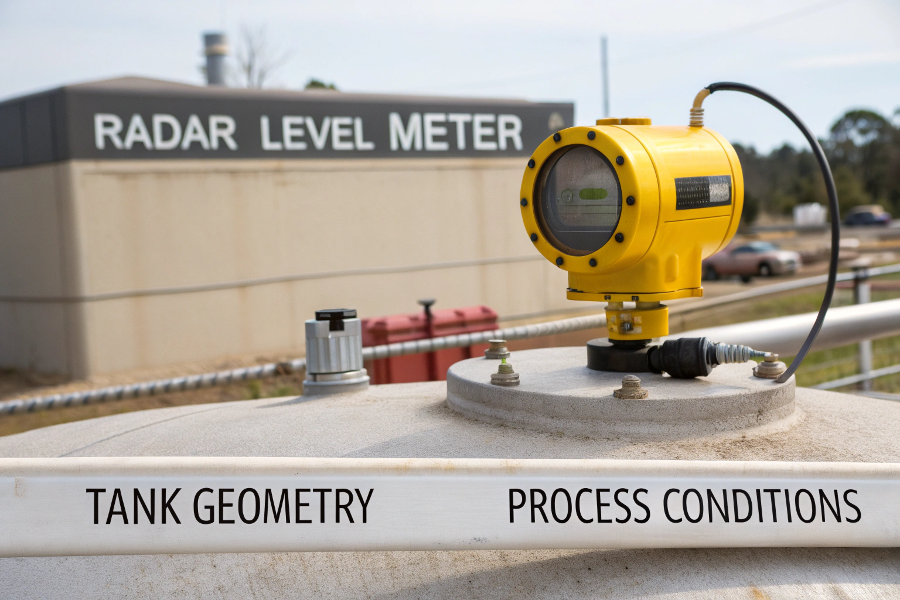
Radar Level Meter Installation Overview
Let me share my installation experience to help you avoid common pitfalls.
How to Install a Radar Level Transmitter?
Incorrect installation can compromise measurement accuracy and reliability.
Installation requires proper nozzle selection, careful positioning, correct orientation, proper wiring, and accurate configuration of parameters.
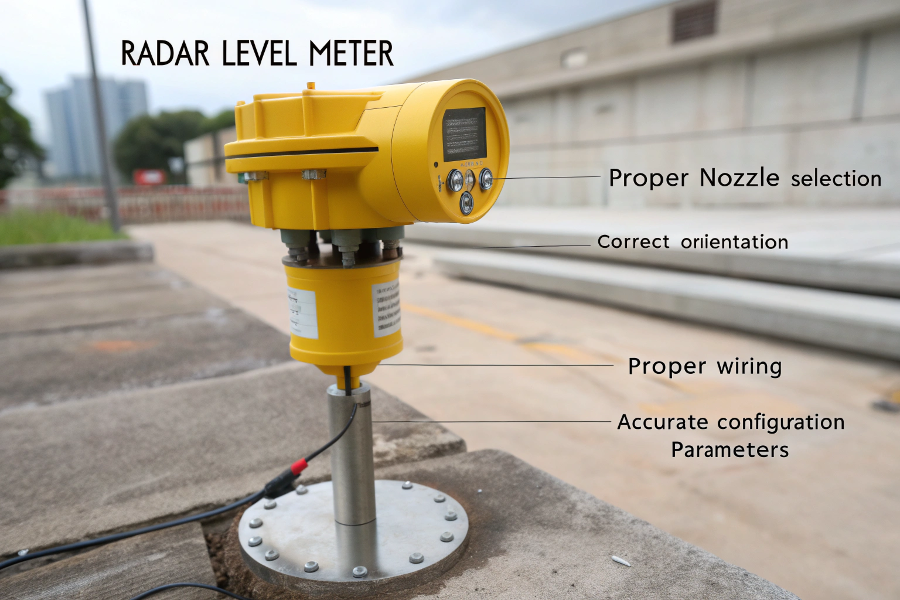
Radar Installation Steps
From my installation experience:
Installation Process
Mounting Considerations
Factor Requirement Why Important Location Center/side Signal path Nozzle height Minimized Dead zone Orientation Vertical ±2° Accuracy Obstacles Clear path Signal strength Physical Installation Steps
- Verify mounting connection
- Check gasket compatibility
- Ensure proper orientation
- Secure mounting hardware
Configuration Setup
Basic Parameters
- Tank dimensions
- Product properties
- Process conditions
- Output settings
Advanced Settings
- False echo mapping
- Signal processing
- Threshold values
- Communication setup
Proper installation ensures optimal performance.
What is a Radar Level Meter?
Understanding the technology helps ensure proper installation.
A radar level meter is a non-contact instrument that uses electromagnetic waves to measure material levels in tanks, vessels, and silos.
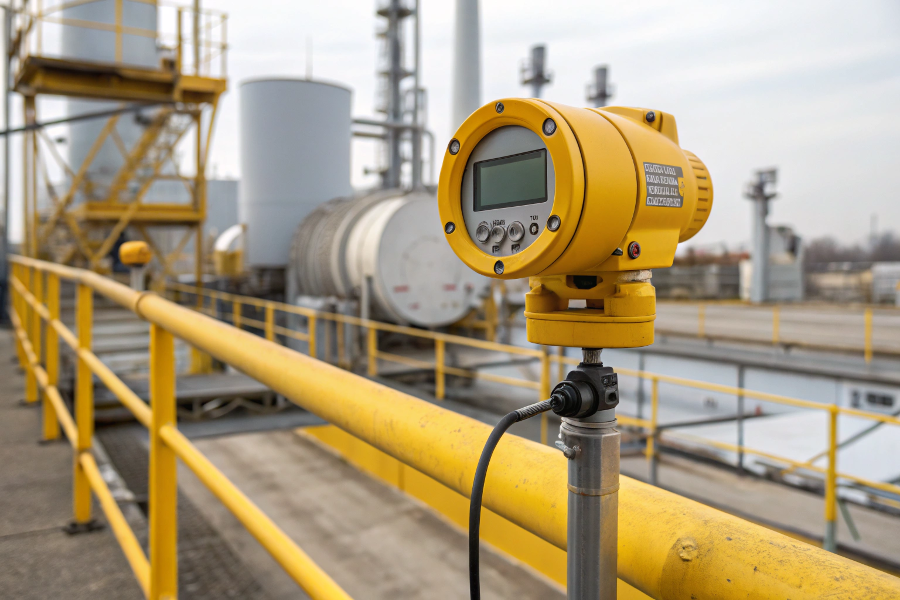
Radar Level Meter Components
Let me explain the key components:
System Components
Main Parts
Component Function Importance Antenna Wave emission Signal quality Electronics Processing Measurement Housing Protection Durability Display Interface Operation Supporting Elements
- Mounting connections
- Sealing systems
- Cable entries
- Process adaptors
Operating Principles
Measurement Process
- Wave transmission
- Signal reflection
- Echo reception
- Distance calculation
Signal Processing
- Echo analysis
- Filtering algorithms
- Level conversion
- Output generation
Understanding these elements aids installation.
What is the Beam Angle in a Radar Level Transmitter?
Beam angle affects installation requirements significantly.
The beam angle is the conical spread of radar waves from the antenna. It typically ranges from 4° to 20° depending on antenna type and frequency.
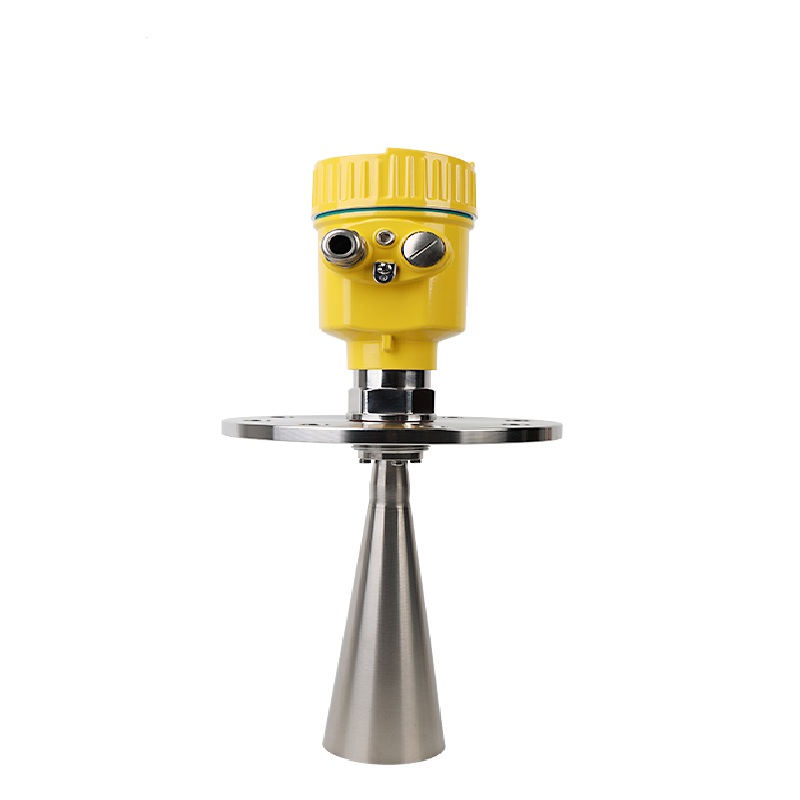
Radar Beam Angle Illustration
Here’s my practical experience:
Beam Angle Considerations
Selection Factors
Factor Impact Consideration Antenna size Beam width Installation space Frequency Signal focus Application Tank size Coverage Measurement Obstacles Interference Positioning Installation Impact
- Nozzle requirements
- Distance to walls
- Obstacle clearance
- Signal path
Application Guidelines
Tank Considerations
- Diameter influence
- Wall effects
- Internal structures
- Product surface
Installation Requirements
- Minimum distances
- Mounting position
- Orientation needs
- Interference zones
Understanding beam angle ensures proper positioning.
How do you Troubleshoot a Radar Level Transmitter?
Effective troubleshooting saves time and reduces downtime.
Troubleshooting involves checking physical installation, verifying electrical connections, analyzing echo curves, and reviewing configuration parameters.
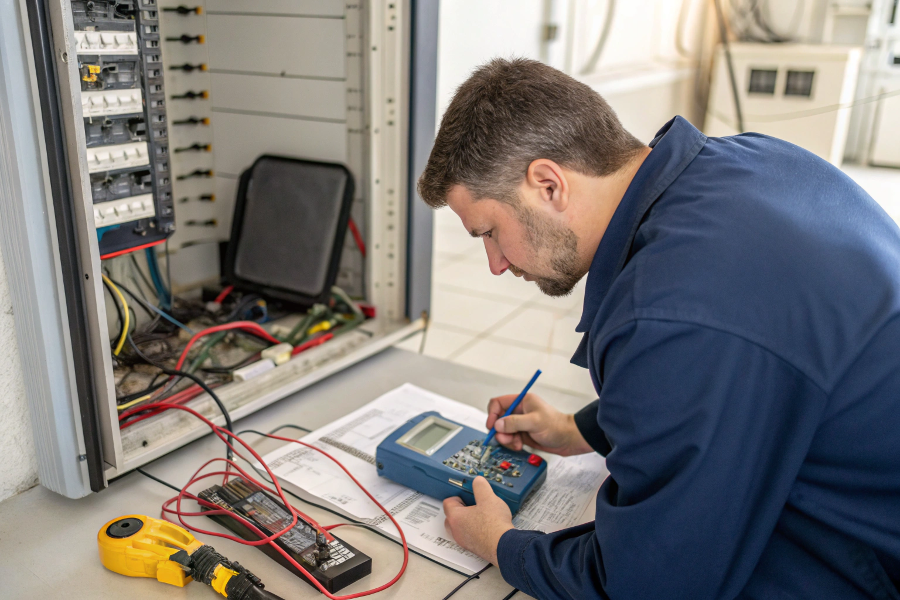
Radar Troubleshooting Steps
Based on my experience:
Troubleshooting Process
Common Issues
Problem Possible Cause Solution No signal Power/wiring Check connections False readings Installation Verify mounting Unstable measurement Process conditions Adjust settings Loss of signal Material properties Review setup Verification Steps
- Physical inspection
- Electrical testing
- Parameter review
- Signal analysis
Diagnostic Tools
Analysis Methods
- Echo curve review
- Trend analysis
- Event logging
- Status checking
Corrective Actions
- Parameter adjustment
- Installation correction
- Maintenance tasks
- Documentation update
Systematic troubleshooting resolves issues efficiently.
Conclusion
Successful radar level meter installation requires proper mounting, correct beam angle consideration, and understanding of troubleshooting procedures. Following these guidelines ensures reliable measurement performance.