
Integrated Type / Remote Type Electromagnetic Flow Meter
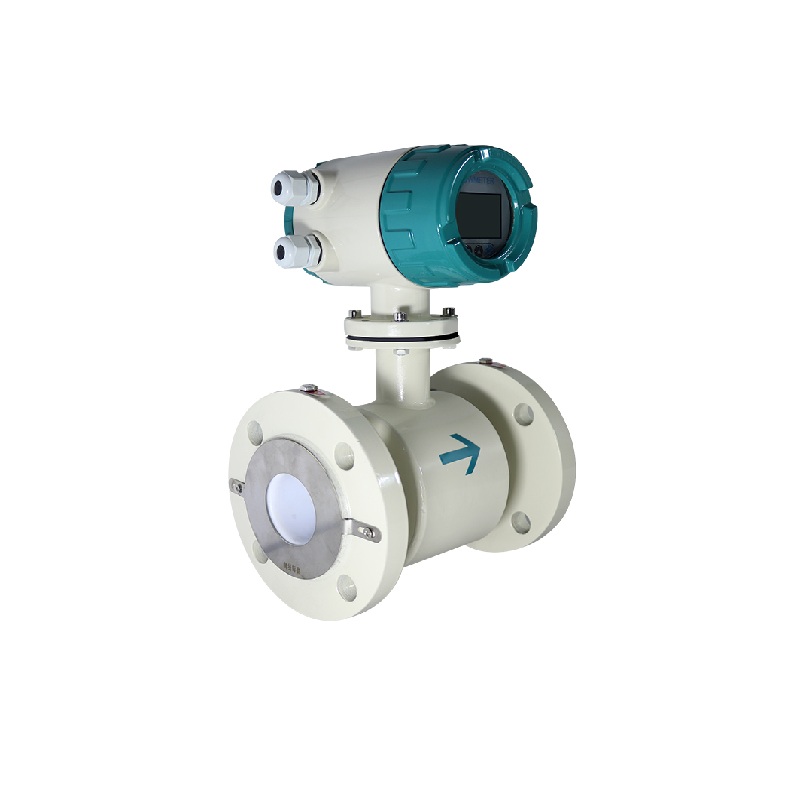
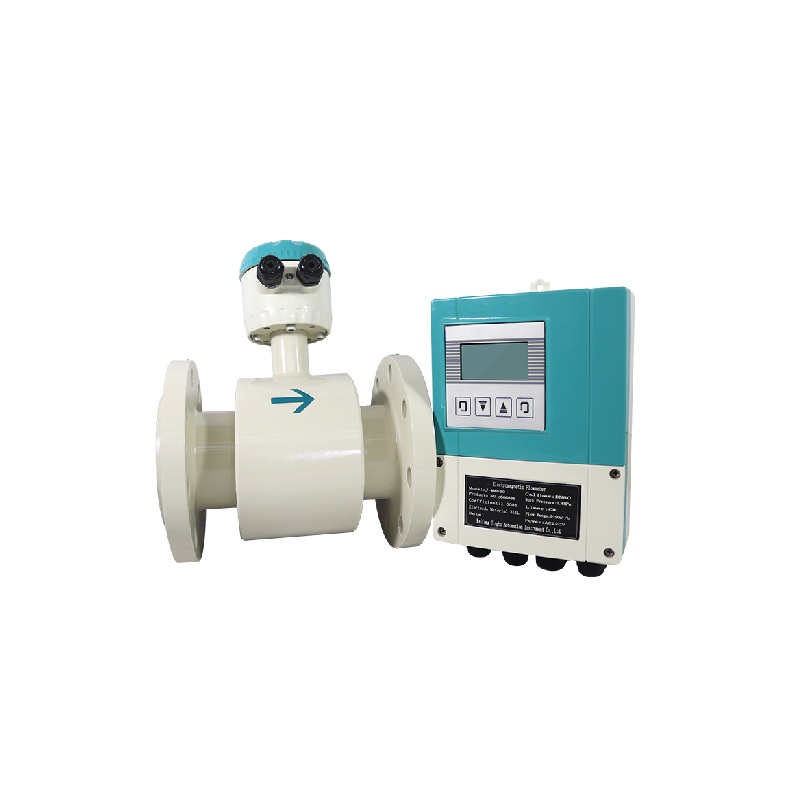
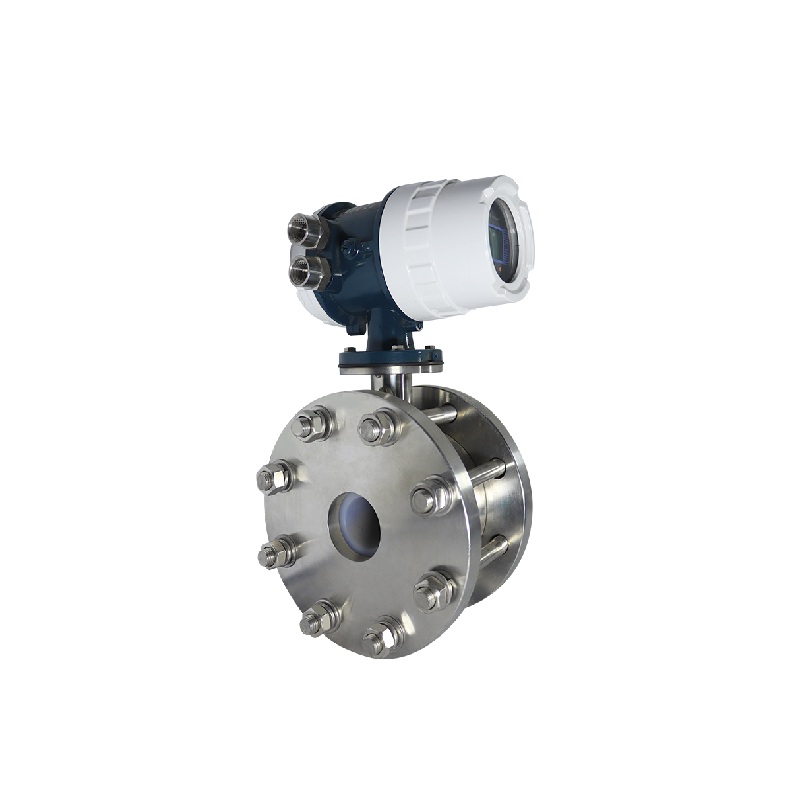
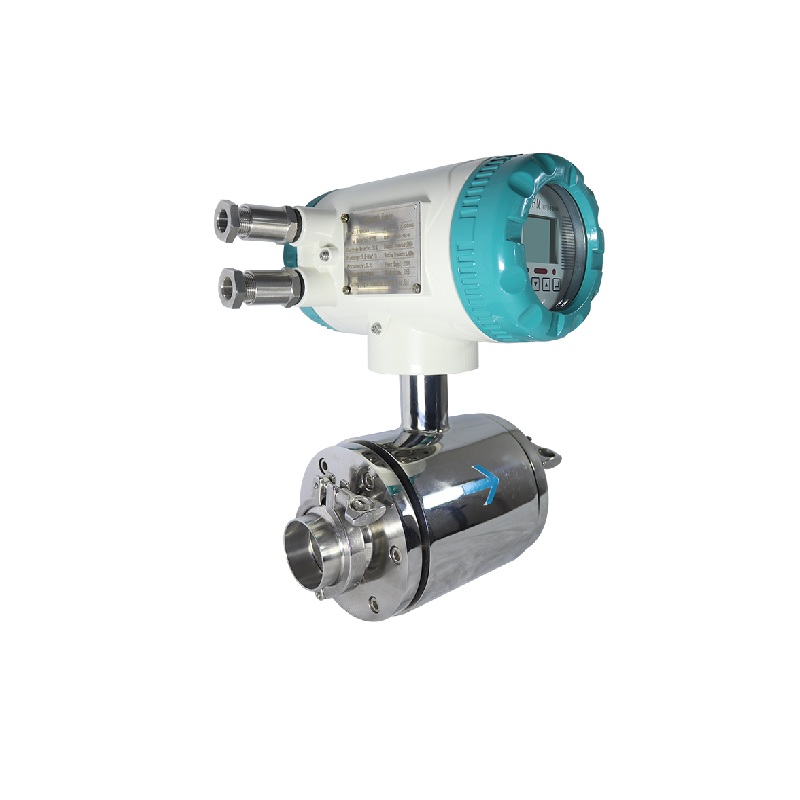
Product Description
✓ IP65 / IP68 Protection · ✓ CE Compliant · ✓ Ex Explosion-proof Available
Pipe Size: DN3 – DN3000
Flow Velocity: 0.1 – 15 m/s
Medium Temp: -40°C to +180°C (liner-dependent)
Min. Conductivity: ≥5 μS/cm
Output: 4–20 mA | RS485 | HART | Pulse
Power Supply: 220V AC / 24V DC / 3.6V Battery
Lead Time: 7 days · MOQ: 1 Unit
Engineer replies within 24 hours · Free technical consultation
Technical Specifications
Performance
| Parameter | Specification |
|---|---|
| Measurement Principle | Faraday’s Law of Electromagnetic Induction — voltage induced is proportional to the velocity of the conductive fluid flowing through a magnetic field |
| Applicable Media | Conductive liquids and slurries (conductivity ≥5 μS/cm) |
| Pipe Diameter Range | DN3–DN3000 (pipeline type) |
| Flow Velocity Range | 0.1–15 m/s |
| Accuracy | ±0.5% of reading (standard) / ±0.2% (optional) |
| Turndown Ratio | 150:1 |
| Response Time | ≤1 second |
| Bi-directional Measurement | Yes — forward total, reverse total, net difference total |
Transmitter
| Parameter | Specification |
|---|---|
| Display | Four-line LCD with backlight |
| Analog Output | 4–20 mA (two-wire) |
| Pulse / Frequency Output | Yes |
| Digital Communication | RS485 Modbus / HART |
| Power Supply | 85–265V AC / 24V DC / 3.6V lithium battery (battery type: 5–10 years) |
| Alarm Output | Relay dry contact, up to 2 channels (empty pipe, flow high/low limit) |
| Ambient Temperature | -10°C to +60°C |
| Protection Rating | IP65 (integrated) / IP68 sensor + IP65 transmitter (remote) |
| Explosion-proof | ExdIIa / ExdII CT6 Gb (optional) |
| Electrical Interface | M20×1.5 |
Sensor (Wetted Parts)
| Parameter | Options |
|---|---|
| Medium Temperature | -40°C to +180°C (liner-dependent) |
| Working Pressure | Up to 42 MPa (high-pressure type) |
| Liner Material | Rubber (general water/wastewater) · PU Polyurethane (abrasive slurry) · PTFE (corrosive chemicals) · F46 / PFA (high-temp corrosive) |
| Electrode Material | 316L Stainless Steel (standard) · Hastelloy B / C (acid/alkali) · Titanium (chloride/seawater) · Tantalum (extreme corrosion) · Platinum |
| Process Connection | Flange / Wafer / Thread / Tri-clamp |
| Pipe Material (body) | Carbon steel / Stainless steel |
Integrated vs. Remote Type — Which Should You Choose?
| Condition | Integrated Type | Remote Type |
|---|---|---|
| Ambient temperature at sensor location | -10°C to +60°C | Choose remote if ambient >60°C |
| Pipe vibration | Low vibration acceptable | High vibration → separate transmitter |
| Space for transmitter at pipe location | Sufficient space | Buried pipe, confined space, or hazardous area |
| Reading / maintenance access | Direct at pipe | Transmitter mounted remotely, up to 100m cable |
| Typical applications | Indoor plants, clean environments, standard DN | Outdoor buried, high-temp lines, large DN pipelines |
Not sure which type fits your installation? Read our guide: Magnetic Flow Meter: How It Works & Selection Guide
How It Works
The operating principle is based on Faraday’s Law of Electromagnetic Induction: when a conductive fluid flows through a magnetic field generated by coils around the measuring tube, a voltage is induced across two electrodes mounted perpendicular to both the flow direction and the magnetic field. The induced voltage is proportional to the velocity of the fluid — multiply by the known pipe diameter and you have volumetric flow rate.
Key practical consequence: the measurement is completely unaffected by fluid density, viscosity, temperature, or pressure. Once calibrated with water, the same meter measures any other conductive fluid at the same accuracy — see how Faraday’s Law applies in practice.
- No moving parts — no rotors, bearings, or seals to wear out
- No obstruction in the flow path — zero pressure loss, nothing to clog
- Empty pipe detection — built-in alarm when pipe runs dry, preventing false zero readings
- Self-diagnosis — continuous self-test with alarm output for wiring faults, coil failures
Read more: Electromagnetic Flow Meter Advantages and Disadvantages
Liner & Electrode Selection Guide
Choose Your Liner by Medium
| Liner Material | Best For | Temp Range | Key Advantage |
|---|---|---|---|
| Rubber | Municipal water, general wastewater, sewage | -20°C to +80°C | Cost-effective, good adhesion, handles low-pressure flow |
| Polyurethane (PU) | Abrasive slurry, mineral pulp, sludge with high solids | -20°C to +60°C | Best wear resistance against sand and particle impact |
| PTFE | Industrial chemical wastewater, acids, alkalis, oxidizers | -40°C to +130°C | Broadest chemical resistance; handles most industrial media |
| F46 / PFA | High-temperature corrosive media | -40°C to +180°C | PTFE-grade chemical resistance at elevated temperature |
Choose Your Electrode by Fluid Chemistry
| Electrode Material | Recommended For | Not Suitable For |
|---|---|---|
| 316L Stainless Steel | Municipal water, general wastewater, food-grade liquids | High chloride concentration |
| Hastelloy C | Mixed industrial wastewater, electroplating, pharma | Strong reducing acids at high temp |
| Titanium | Seawater, high-chloride wastewater, disinfectant solutions | Reducing acids (HCl, H₂SO₄) |
| Tantalum | Extreme corrosion: strong acid pickling, smelting discharge | Cost-sensitive applications (expensive) |
| Platinum | Pharmaceutical, food-grade, high-purity applications | General industrial (cost) |
Need help matching liner and electrode to your specific fluid? Send us your medium data sheet — our engineers will confirm compatibility within 24 hours.
Also read: How Does Liner Material Impact Flow Meter Performance?
Typical Applications
🔧 Electromagnetic Flow Meter for Wastewater Treatment — Effluent & Sludge Monitoring
The Problem: Wastewater treatment plants need to measure influent, effluent, and inter-process flows accurately — including flows with suspended solids, grit, and activated sludge. Mechanical meters clog. Ultrasonic meters struggle with high-solids content. Accurate wastewater flow rate measurement is critical for compliance reporting.
Why Electromagnetic Works: No moving parts means nothing to clog. No obstruction in the flow path means zero pressure drop — critical in gravity-fed sewer systems. The electromagnetic flow meter’s working principle is unaffected by solids content, density changes, or viscosity — the induced voltage is proportional to the velocity of the conductive fluid regardless of what’s in it.
Recommended Configuration: DN100–DN1200 · Rubber or PU liner · 316L stainless steel electrodes · IP68 sensor · Remote transmitter for above-ground mounting
Client name available upon NDA — contact us to discuss your project.
🔧 Industrial Chemical Processing — Corrosive Fluid Metering
The Problem: Chemical plants need to measure flow of acids, alkalis, oxidizers, and aggressive industrial wastewater. Standard 316L electrodes corrode. Incorrect liner selection leads to premature failure and measurement drift.
Why Electromagnetic Works: The sensor body never contacts the fluid — only the liner and electrodes do. Matching liner and electrode materials to the specific chemical provides long service life with no performance degradation. For highly corrosive media: PTFE liner + Hastelloy C or Titanium electrodes. For standard industrial wastewater: rubber liner + 316L electrodes.
Recommended Configuration: DN15–DN500 · PTFE liner · Hastelloy C or Titanium electrodes · IP65 transmitter · HART output for DCS integration
Client name available upon NDA — contact us to discuss your project.
🔧 Water Supply & Distribution — Large Diameter Mains
The Problem: Utilities need reliable, low-maintenance meters on DN300–DN1200 distribution mains. Mechanical meters require periodic overhaul. Accuracy must hold over years without drift.
Why Electromagnetic Works: No moving parts = no scheduled maintenance beyond periodic zero-point checks. The accuracy of electromagnetic flow meters — ±0.5% of reading — stays stable over the full lifecycle because the measurement depends on Faraday’s Law, not mechanical wear. The measuring principle relies on the voltage induced when a conductive liquid flows through a magnetic field, with no wear-prone components.
Recommended Configuration: DN300–DN1200 · Rubber liner · 316L electrodes · Remote type · 4–20 mA + pulse output for billing system integration
Can We Meet Your Requirements?
| Requirement | Capability | Status |
|---|---|---|
| Pipe Size DN3–DN300 | Integrated (compact) type, standard configuration | ✅ In stock |
| Pipe Size DN300–DN3000 | Remote type with separate transmitter recommended | ✅ Available (7-day lead time) |
| Municipal wastewater / sewage | Rubber or PU liner + 316L electrodes, standard config | ✅ Standard |
| Corrosive industrial wastewater | PTFE liner + Hastelloy C or Titanium electrodes | ✅ Available |
| Abrasive slurry / sludge | PU liner (wear-resistant) + hard electrode option | ✅ Available |
| High-temperature medium (>80°C) | PTFE liner, medium temp up to +180°C | ✅ Available |
| Accuracy ±0.5% | Standard specification | ✅ Standard |
| Accuracy ±0.2% | Premium calibration option | ✅ Available (confirm at inquiry) |
| SCADA / PLC integration | 4–20 mA, RS485 Modbus, HART, pulse output | ✅ Standard |
| Explosion-proof (Ex) requirement | ExdIIa / ExdII CT6 Gb certified configurations | ✅ Available |
| Battery-powered (no AC supply) | 3.6V lithium battery, 5–10 years runtime | ✅ Available |
| Non-conductive fluid (oil, gas, ultrapure water) | Requires minimum conductivity ≥5 μS/cm | ❌ Not suitable — see vortex or ultrasonic |
| Gas or steam flow | Electromagnetic principle requires liquid medium | ❌ Not suitable — use vortex flow meter |
Our Capabilities & Boundaries
WHAT WE DO:
- Volume flow measurement of any conductive liquid or slurry — water, wastewater, chemicals, food-grade fluids, pulp, slurry, acid, alkali
- Minimum conductivity requirement: ≥5 μS/cm (most industrial liquids qualify)
- Bi-directional measurement with three built-in totalizers (forward, reverse, net)
- Remote-type configuration for high-temperature, buried, or hazardous-area sensors where the transmitter must be mounted separately
- Full SCADA/PLC integration: 4–20 mA, RS485 Modbus, HART, pulse/frequency output
- Liner and electrode material customization for corrosive or abrasive fluids
WHAT WE DON’T DO:
- Gas or steam flow → Use our vortex flow meter for steam or compressed air
- Ultrapure water (conductivity <5 μS/cm) → Learn why mag meters can’t measure ultrapure water
- Open-channel or non-full-pipe flow → See our guide on non-full pipe conditions
- Custody transfer at ±0.1% or better → Requires Coriolis technology
Ideal Applications
The electromagnetic flow meter for wastewater is the industry standard choice because it handles suspended solids, delivers zero pressure drop, and requires virtually no maintenance.
✅ Recommended
| Application | Why Electromagnetic Flow Meter Excels |
|---|---|
| Municipal water supply & distribution | No maintenance, ±0.5% accuracy holds over full lifecycle |
| Wastewater & sewage treatment | Handles high solids, no clogging, compliance-grade accuracy. Learn more → |
| Chemical processing (acids, alkalis) | PTFE/Hastelloy configuration withstands aggressive media |
| Mining & mineral slurry | PU liner handles abrasive particles; no obstruction to clog |
| Food & beverage (conductive media) | Tri-clamp sanitary connection; Pt electrodes available; easy CIP |
| Pharmaceutical & biotech | High-purity electrode options; full traceability documentation |
| Power plant cooling water | Large DN, zero pressure drop, long-term stability |
| Irrigation & water conservancy | Battery type available; no power infrastructure needed |
❌ Not Recommended For
| Application | Why | Better Alternative |
|---|---|---|
| Gas or steam flow | Requires conductive liquid medium | Vortex flow meter |
| Ultrapure water (<5 μS/cm) | Insufficient conductivity for signal generation | Ultrasonic or Coriolis |
| Non-full pipe / open channel | Requires full pipe for accurate measurement | See explanation |
| Petroleum / hydrocarbons | Hydrocarbons are non-conductive | Turbine or Coriolis |
More comparisons: Electromagnetic Flow Meters vs. Other Flow Meters · EMF vs. Ultrasonic vs. Coriolis: Which Wins?
Ordering Information
| Item | Details |
|---|---|
| MOQ | 1 unit |
| Standard Lead Time | 7 days |
| Rush Order | Available — contact sales for expedited delivery |
| Payment Terms | T/T |
| Warranty | 12 months from shipment date |
| Packaging | Individual carton with foam protection, ISPM 15 compliant wood packaging |
| Included Documentation | Factory calibration certificate · Operation manual · Test report with actual measurement data |
| Export Markets | 65+ countries; standard export packaging with CE documentation |
Frequently Asked Questions
What is the minimum conductivity for an electromagnetic flow meter?
The minimum conductivity required is ≥5 μS/cm. Most industrial liquids — tap water, wastewater, acids, alkalis, and food-grade fluids — easily exceed this threshold. Fluids that do NOT qualify include petroleum products, most gases, ultrapure water, and deionized water. Read more: Does Conductivity Affect Magnetic Flow Meter?
What is the difference between integrated and remote type electromagnetic flow meters?
Integrated type combines the sensor and transmitter in a single unit mounted directly on the pipe. Simpler installation, lower cost. Suitable when ambient temperature at the pipe is within -10°C to +60°C and vibration is low. Remote type separates the sensor (on the pipe) from the transmitter (mounted up to 100m away). Choose remote type when the pipe is buried, in a high-temperature environment, in a hazardous area, or where the display needs to be accessible from a distance.
How accurate is an electromagnetic flow meter?
Standard accuracy is ±0.5% of reading. An optional ±0.2% calibration is available for applications with tighter measurement requirements. Unlike mechanical meters, accuracy does not degrade over time — there are no moving parts to wear. The measurement is unaffected by changes in fluid density, viscosity, temperature, or pressure. Read: How Accurate Are Electromagnetic Flow Meters?
Can electromagnetic flow meters handle wastewater and sludge?
Yes — this is one of the primary applications. Electromagnetic flowmeters are the standard choice for wastewater treatment plants because they have no moving parts to clog, zero pressure drop (critical in gravity systems), and maintain accuracy regardless of suspended solids content. For abrasive sludge, select a polyurethane liner for wear resistance. For corrosive industrial effluent, choose PTFE liner with Hastelloy or Titanium electrodes.
What are the straight pipe run requirements for installation?
Electromagnetic flow meters have lower straight run requirements than most other meter types. Typically: 5× pipe diameter (5D) upstream, 2–3D downstream. This is significantly less than orifice plates (20D+) or vortex meters (10D+). Read the full guide: Magnetic Flow Meter Piping Requirements.
Why does an electromagnetic flow meter need grounding?
The electrodes detect millivolt-level signals from the fluid. Any stray electrical potential in the fluid (from the pipe system) will appear as interference and cause measurement error. Grounding establishes a stable electrical reference between the fluid and the meter, eliminating this interference. On plastic or rubber-lined pipes, grounding rings are required. On bare metal pipes, the pipe itself often provides adequate grounding. See: Why Does a Magnetic Flow Meter Need Grounding? and How to Properly Install Grounding Rings.
What maintenance does an electromagnetic flow meter require?
Minimal. No moving parts means no scheduled replacement of bearings, seals, or rotors. Main maintenance tasks: periodic zero-point verification (can be done without removing the meter), inspection of electrode surfaces for scaling or coating, and checking signal cable connections. Most installations run 5–10 years without significant maintenance. Read: What Maintenance Is Required for Electromagnetic Flow Meters?
Can the meter measure flow in both directions?
Yes. Bi-directional measurement is standard. The meter includes three built-in totalizers: forward flow total, reverse flow total, and net difference total. The flow direction is indicated on the display and can trigger a relay alarm if reverse flow exceeds a set limit. Useful for HVAC return loops, pump testing, and leak detection on distribution networks.
Get Your Custom Quote in 24 Hours
At Soaring Instrument, we manufacture electromagnetic flow meters for DN3 to DN3000 across all liner and electrode material combinations — integrated and remote types, standard and explosion-proof configurations. We’ll recommend the right configuration for your application based on your fluid data, pipe size, and process conditions.
Tell us your pipe size, medium type, temperature, pressure, and conductivity. Our engineering team responds with a technical recommendation and pricing within 24 hours.
- 📧 [email protected]
- 📞 0086-13585991410
- 🌐 Contact Us Online
What Happens After You Submit?
- Step 1: Engineer reviews your application and replies within 24 hours
- Step 2: Free 30-minute technical consultation (no obligation)
- Step 3: Detailed proposal with configuration and pricing in 3 business days
Related Resources
- Magnetic Flow Meter: How It Works & Selection Guide
- How Electromagnetic Flowmeters Work: Faraday’s Law in Action
- Electromagnetic Flow Meter Advantages and Disadvantages
- Can Electromagnetic Flow Meters Handle Corrosive or Abrasive Fluids?
- Wastewater Treatment: Why EMFs Are the Unsung Heroes of WWTPs
- How Electromagnetic Flow Meters Improve Efficiency in Wastewater Treatment
- Electrode Materials Face-Off: Titanium vs. Hastelloy vs. Platinum
- Magnetic Flow Meter Piping Requirements: Complete Installation Guide
- General Mistakes About the Installation of Electromagnetic Flow Meter
- What Is an Electromagnetic Flow Meter for Wastewater?
- Say Goodbye to Clogs: How Mag Flow Meters Handle Sludge & Slurries
- Magnetic Flow Meter Troubleshooting: Simple Fixes for Common Problems