
Insertion Type
Electromagnetic Flow Meter
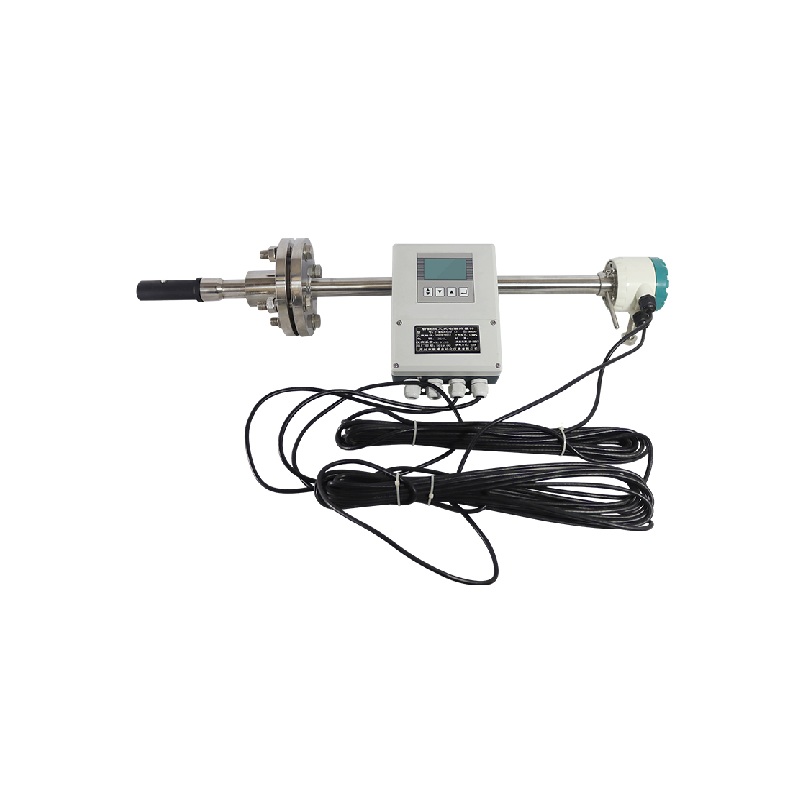
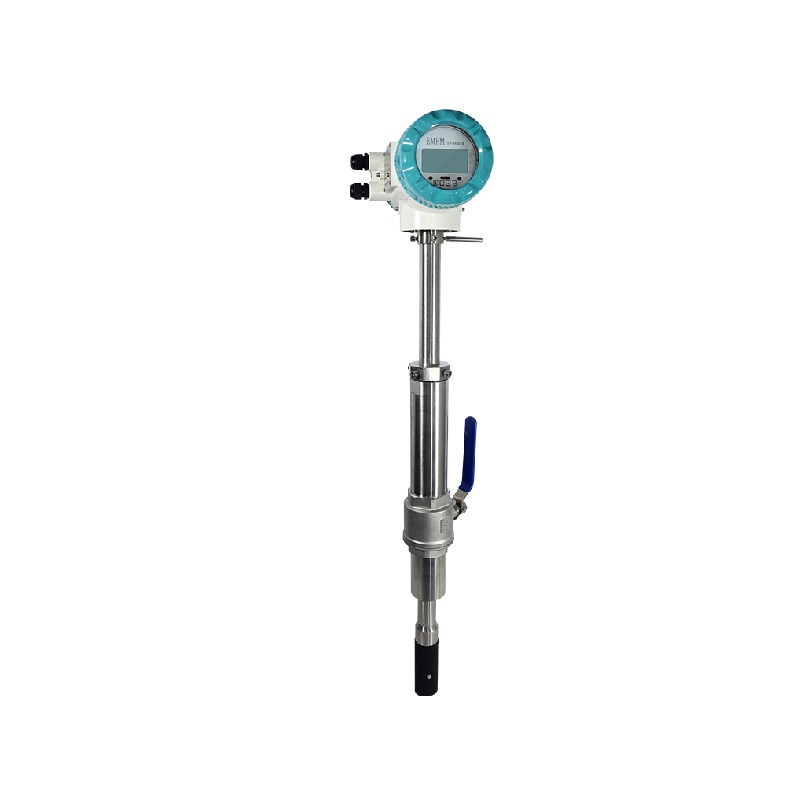
Product Description
✓ IP65 / IP68 Protection · ✓ CE Compliant · ✓ Ex Explosion-proof Available
Pipe Size: DN100 – DN3000 (Insertion)
Flow Velocity: 0.1 – 15 m/s
Ambient Temp: -10°C to +60°C
Medium Temp: -40°C to +180°C
Working Pressure: Up to 4.0 MPa (Insertion)
Process Connection: Ball Valve (Insertion type)
Output: 4–20 mA | RS485/HART | Pulse
Power Supply: 220V AC / 24V DC / 3.6V Battery
Protection: IP65 / IP68
Lead Time: 7 days · MOQ: 1 Unit
Engineer replies within 24 hours · Free technical consultation
Technical Specifications
The table below covers both pipeline type and insertion type for direct comparison. This page focuses on the insertion electromagnetic flowmeter (DN100–DN3000).
| Parameter | Pipeline Type | Insertion Type |
|---|---|---|
| Application Media | Conductive liquid (conductivity ≥5 μS/cm) | |
| Accuracy | ±0.5% | ±0.2% (customized) |
| Ambient Temperature | -10°C to +60°C | |
| Medium Temperature | -40°C to +180°C | -40°C to +180°C |
| Power Supply | 220V AC / 24V DC / 3.6V lithium battery | |
| Working Pressure (Max) | 42 MPa | 4.0 MPa |
| Response Time | ≤1 second | |
| Output Method | RS485 / HART · 4–20 mA analog · Pulse / frequency output | |
| Pipe Material | Carbon steel · Stainless steel | |
| Protection Class | IP65 / IP68 | |
| Alarm Output | Relay dry contact, up to 2 channels | |
| Pipe Diameter Range | DN3 – DN3000 | DN100 – DN3000 |
| Velocity Range | 0.1 – 15 m/s | |
| Turndown Ratio | 150:1 | |
| Explosion-proof Grade | ExdIIa · ExdII CT6 Gb | |
| Process Connection | Flange · Thread · Clamp | Ball Valve |
| Electrical Interface | M20×1.5 | |
| Display | Four-line LCD display | |
Need the full-bore pipeline type? See our Electromagnetic Flow Meter (DN3–DN3000) product page.
Flange Type vs. Ball Valve Type — Which to Choose?
| Condition | Flange Type | Ball Valve Type (Hot Tap) |
|---|---|---|
| Installation with flow running | Requires pipe shutdown | ✅ Hot tap — no shutdown needed |
| Future removal under pressure | Requires pipe shutdown | ✅ Retractable under full pressure |
| New pipe installation | ✅ Standard choice, lower cost | Also available |
| Retrofit on existing live pipeline | Not recommended | ✅ Purpose-built for this |
Not sure which connection type fits your installation? Tell us your pipe size, working pressure, and whether the line can be shut down — we’ll confirm the right configuration within 24 hours.
Typical Applications
🔧 Municipal Water Supply — Large Diameter Mains Retrofit
Challenge: A water utility needs to add flow metering to existing DN600–DN1200 transmission mains. Cutting out a pipe section to install a full-bore meter would require a multi-day shutdown and major excavation — unacceptable for a live distribution network managing non-revenue water losses.
Why Insertion Electromagnetic Works: The ball valve hot tap version allows the probe to be installed while the pipe is under full pressure and flow. A hot tap drilling machine creates the access point, the isolation valve is fitted, and the probe is inserted — all without interrupting water supply. No moving parts in the flow stream means no maintenance on the sensor itself for years.
Recommended Configuration: DN300–DN1200 · Ball Valve Type · 316L stainless steel probe · Remote transmitter · 4–20 mA + pulse output for SCADA billing integration
Client name available upon NDA — contact us to discuss your project.
🔧 Wastewater Treatment — Large Trunk Sewer Flow Monitoring
Challenge: Wastewater treatment plants need flow measurement on DN800–DN2000 trunk sewers carrying raw influent with suspended solids and grit. Full-bore meters at this size are extremely expensive and require major pipe modifications to existing infrastructure.
Why Insertion Electromagnetic Works: No moving parts means nothing to clog in high-solids wastewater. The insertion electromagnetic flowmeter handles conductive liquid regardless of suspended solids content — the magnetic field induces a voltage proportional to flow velocity, unaffected by what is carried in the liquid. Installation via a flange weld-on is far less disruptive than replacing a pipe section.
Recommended Configuration: DN500–DN2000 · Flange Type · Stainless steel probe · IP68 rating · Remote transmitter for above-ground mounting
Client name available upon NDA — contact us to discuss your project.
🔧 Industrial Cooling Water — Large Pipe Energy Monitoring
Challenge: Power plants and heavy industry run DN400–DN1000 cooling water circuits. The pipe is already operational. Adding flow measurement for energy optimization and leak detection must not cause production downtime.
Why Insertion Electromagnetic Works: Hot tap installation eliminates production downtime. The insertion flow meter for large diameter pipes delivers reliable flow rate data at a fraction of the cost of a full-bore meter of equivalent size. Wide range DN100–DN3000 covers virtually all industrial cooling circuit sizes.
Recommended Configuration: DN400–DN1000 · Ball Valve Type · 316L stainless steel probe · Integrated transmitter · RS485 output for DCS integration
Can We Meet Your Requirements?
| Requirement | Capability | Status |
|---|---|---|
| Pipe Size DN100–DN500 | Standard insertion probe, flange or ball valve type | ✅ In stock |
| Pipe Size DN500–DN3000 | Large-diameter insertion probe, remote transmitter recommended | ✅ Available (7-day lead time) |
| Hot tap installation (live pipe, no shutdown) | Ball valve type with retractor — install and remove under full pressure | ✅ Standard option |
| Municipal water / clean water | Stainless steel probe, standard configuration | ✅ Standard |
| Wastewater with suspended solids | No moving parts — unaffected by solids content in conductive liquid | ✅ Standard |
| Industrial cooling water | Standard configuration, stainless steel probe | ✅ Standard |
| SCADA / PLC integration | 4–20 mA, RS485, HART, pulse output | ✅ Standard |
| Battery-powered (no AC supply) | 3.6V lithium battery, 5–10 years runtime | ✅ Available |
| Explosion-proof (Ex) requirement | ExdIIa / ExdII CT6 Gb certified configurations | ✅ Available |
| Non-conductive fluid (oil, gas, ultrapure water) | Requires minimum conductivity ≥5 μS/cm | ❌ Not suitable — see vortex or ultrasonic |
| Gas or steam flow | Electromagnetic principle requires liquid medium | ❌ Not suitable — use vortex flow meter |
| Pipe diameter below DN100 | Use full-bore pipeline electromagnetic flow meter for smaller pipes | ❌ Not this model — see pipeline type |
Our Capabilities & Boundaries
WHAT WE DO:
- Flow measurement of conductive liquids in large-diameter pipes DN100–DN3000
- Hot tap installation on live pipelines under pressure — ball valve type, no shutdown required
- Retrofit flow metering on existing pipelines where full-bore installation is impractical or uneconomic
- Bi-directional measurement with three built-in totalizers (forward, reverse, net)
- Full SCADA/PLC integration: 4–20 mA, RS485, HART, pulse/frequency output
WHAT WE DON’T DO:
- Pipes below DN100 → Use our full-bore electromagnetic flow meter (DN3–DN3000)
- Gas or steam → Use our vortex flow meter
- Ultrapure water (conductivity <5 μS/cm) → Requires ultrasonic or Coriolis technology
- Custody transfer at ±0.1% or better → Requires full-bore Coriolis technology
How It Works
The insertion electromagnetic flow meter operates on Faraday’s Law of electromagnetic induction: when a conductive fluid flows through the magnetic field generated by coils inside the sensor head, a voltage is induced across two electrodes. This voltage is directly proportional to the flow velocity — multiply by the known pipe cross-section area and you have the volumetric flow rate.
The probe is inserted through the pipe wall so the sensor head reaches approximately 1/8 of the pipe diameter into the flow stream — the representative velocity sampling point according to fluid mechanics principles. For a DN1000 pipe, that is approximately 125 mm of insertion depth.
- No moving parts — no rotor to jam, no bearings to wear, no seals in the flow path
- No pressure drop — the probe occupies minimal cross-section; flow resistance is negligible
- Unaffected by fluid properties — density, viscosity, temperature, and pressure changes do not affect accuracy
- Integrated ground electrode — eliminates interference from stray electrical currents in the pipe system
- Solid-state sensor packaging — vibration-resistant, anti-penetration, designed for long service life on industrial pipelines
Read more: How Electromagnetic Flowmeters Work: Faraday’s Law in Action
Ordering Information
| Item | Details |
|---|---|
| MOQ | 1 unit |
| Standard Lead Time | 7 days |
| Rush Order | Available — contact sales for expedited delivery |
| Payment Terms | T/T |
| Warranty | 12 months from shipment date |
| Packaging | Individual carton with foam protection, ISPM 15 compliant wood packaging |
| Included Documentation | Factory calibration certificate · Operation manual · Test report with actual measurement data |
| Export Markets | 65+ countries; CE documentation included |
Frequently Asked Questions
What is an insertion type electromagnetic flow meter?
An insertion type electromagnetic flow meter — also called insertion electromagnetic flowmeter or insertion magmeter — is a probe-style flow sensor inserted through the pipe wall into a large-diameter pipeline. It measures flow rate using Faraday’s Law of electromagnetic induction without requiring the pipe to be cut or replaced. It covers pipe sizes DN100–DN3000 and is the cost-effective alternative to full-bore electromagnetic meters for large pipes.
What is hot tap installation and how does it work?
Hot tap installation means the flow meter is installed while the pipeline is under full operating pressure and flow — no shutdown required. With the ball valve type insertion electromagnetic flow meter, a hot tap drilling machine creates an access hole in the pipe wall, an isolation ball valve is fitted onto the weld-on saddle, and the probe is inserted through the valve into the flow stream. If the meter needs maintenance, the ball valve is closed and the probe retracted without interrupting pipeline operation. This is the standard method for retrofitting flow measurement on water distribution mains, trunk sewers, and industrial pipelines where shutting down is not acceptable.
What is the accuracy of an insertion electromagnetic flow meter?
The insertion electromagnetic flow meter offers ±0.2% accuracy (customized option) — confirm the standard accuracy grade at inquiry based on your application requirements. Unlike mechanical meters, accuracy does not degrade over time since there are no moving parts to wear. The measurement is unaffected by changes in fluid density, viscosity, temperature, or pressure. For most municipal water and wastewater applications, this level of accuracy is fully sufficient for billing, NRW management, and process control.
What pipe sizes is the insertion electromagnetic flow meter suitable for?
The insertion electromagnetic flow meter covers DN100 to DN3000. It is specifically designed for large-diameter pipes where a full-bore meter would be prohibitively expensive or structurally impractical. For pipes DN3–DN100, a full-bore pipeline electromagnetic flow meter is the better choice in terms of accuracy and installation simplicity.
Can the insertion flow meter measure wastewater with suspended solids?
Yes. Because there are no moving parts in the flow stream, the insertion electromagnetic flowmeter is not affected by suspended solids, grit, or fibrous material in the liquid. The measurement is based purely on electromagnetic induction — the induced voltage is proportional to flow velocity regardless of what is carried in the conductive liquid. This makes it well-suited to raw wastewater influent, treated effluent, and sludge flows in wastewater treatment plants.
How deep should the probe be inserted into the pipe?
The sensor head is typically inserted to approximately 1/8 of the pipe diameter into the flow stream — measured from the inside pipe wall. This position corresponds to the representative flow velocity point in the velocity profile based on fluid mechanics principles (Miller Best Practices). For pipes larger than DN250 (10 inches), this insertion depth is typically less than 125 mm. The probe is adjusted to the correct depth during installation using the depth stop on the mounting assembly.
What straight pipe run is required upstream of the insertion meter?
Insertion electromagnetic flow meters typically require 10× pipe diameter (10D) upstream and 5D downstream from elbows, valves, pumps, or other flow disturbances to achieve rated accuracy. Because the probe samples velocity at a single point, it is more sensitive to velocity profile distortion than a full-bore meter. When selecting the installation location on an existing pipeline, identify the longest available straight run away from bends and partially open valves.
Get Your Custom Quote in 24 Hours
At Soaring Instrument, we manufacture insertion electromagnetic flow meters for DN100 to DN3000 — flange type and ball valve hot tap type, standard and explosion-proof configurations. We’ll recommend the right probe size, insertion depth, and connection type for your specific pipe and process conditions.
Tell us your pipe diameter, medium type, flow velocity range, working pressure, and whether hot tap installation is required. Our engineering team responds with a technical recommendation and pricing within 24 hours.
- 📧 [email protected]
- 📞 0086-13585991410
- 🌐 Contact Us Online
What Happens After You Submit?
- Step 1: Engineer reviews your application and replies within 24 hours
- Step 2: Free 30-minute technical consultation (no obligation)
- Step 3: Detailed proposal with configuration and pricing in 3 business days
Related Resources
- Electromagnetic Flow Meter (Full-Bore Pipeline Type) — DN3–DN3000
- Magnetic Flow Meter: How It Works & Selection Guide
- How Electromagnetic Flowmeters Work: Faraday’s Law in Action
- Electromagnetic Flow Meter Advantages and Disadvantages
- Magnetic Flow Meter Piping Requirements: Complete Installation Guide
- How Accurate Are Electromagnetic Flow Meters Compared to Other Types?
- Wastewater Treatment: Why EMFs Are the Unsung Heroes of WWTPs
- Electromagnetic Flow Meters vs. Other Flow Meters