Every year, pharmaceutical manufacturers face FDA warning letters citing equipment that fails to meet current Good Manufacturing Practice (cGMP) standards. In our experience working with pharma clients across Asia and the Middle East, flow measurement is one of the most overlooked compliance risks — not because engineers don’t care, but because the gap between “industrial grade” and “pharmaceutical grade” is poorly understood.
This guide cuts through the marketing noise. We’ll walk you through exactly what FDA regulations require from your flow meters, what “sanitary design” actually means in practice, and how to select the right flow measurement technology for your specific pharmaceutical application — whether it’s Water for Injection (WFI) loops, API batch dosing, or CIP/SIP cleaning validation.
Quick Answer: A pharmaceutical flow meter must feature 316L stainless steel wetted parts, electropolished surfaces (Ra ≤ 0.8 μm), Tri-Clamp sanitary fittings, full CIP/SIP compatibility, and come with IQ/OQ/PQ validation documentation to meet FDA cGMP requirements under 21 CFR Part 211.
Related Reading: If you’re new to electromagnetic flow measurement technology, start with our Magnetic Flow Meter: How It Works & Selection Guide for foundational knowledge.
Why Accurate Flow Measurement Matters in Pharmaceutical Manufacturing
In pharmaceutical production, flow measurement isn’t just about process efficiency — it’s about patient safety and regulatory compliance. Every milliliter of Active Pharmaceutical Ingredient (API) that enters a formulation, every liter of Water for Injection (WFI) that circulates through purified water loops, and every batch of CIP cleaning solution that passes through your equipment must be precisely measured, recorded, and traceable.
Here’s what’s at stake:
| Risk Area | Consequence of Inaccurate Flow Measurement |
|---|---|
| API Dosing | Incorrect drug potency → patient harm, batch rejection |
| WFI Monitoring | Undetected contamination → product recall |
| CIP Validation | Incomplete cleaning → cross-contamination between batches |
| Batch Records | Inaccurate data → FDA 483 observations, warning letters |
| Yield Control | Material waste → increased cost per unit |
It is not uncommon for pharmaceutical facilities to reject entire production batches when flow meters drift beyond acceptable limits during high-temperature SIP cycles. A common root cause we encounter across the industry: standard industrial electromagnetic flow meters with rubber liners that degrade under repeated steam sterilization at 135°C. A proper sanitary design with a PFA liner prevents this entirely.
Lesson from the Field: Never assume an “industrial grade” flow meter can survive pharmaceutical process conditions. The combination of aggressive CIP chemicals (NaOH, H₂O₂) and high-temperature SIP cycles will destroy non-pharmaceutical-rated components within months.
FDA Compliance Framework: What the Regulations Actually Require
Let’s be clear about something most flow meter manufacturers won’t tell you: the FDA does not “approve” or “certify” individual flow meters. Instead, the FDA requires that all equipment used in drug manufacturing comply with current Good Manufacturing Practices (cGMP) as defined in 21 CFR Part 211.
What cGMP Means for Flow Meters
The relevant cGMP requirements translate into specific flow meter design criteria:
| FDA cGMP Requirement | What It Means for Your Flow Meter |
|---|---|
| §211.63 — Equipment design | Must be of appropriate design, adequate size, and suitably located to facilitate operations and cleaning |
| §211.65 — Equipment construction | Contact surfaces shall not be reactive, additive, or absorptive; shall not alter safety, identity, or quality of the drug product |
| §211.67 — Equipment cleaning | Equipment shall be cleaned, maintained, and sanitized at appropriate intervals to prevent contamination |
| §211.68 — Automatic equipment | Must be routinely calibrated, inspected, or checked according to a written program to ensure proper performance |
The Three Standards You Must Know
Beyond FDA cGMP, three industry standards define the specific design criteria for sanitary flow measurement equipment:
1. 3-A Sanitary Standards (Standard 28-series for flow meters)
- Defines cleanability criteria for food-contact and pharma-contact equipment
- Equipment displaying the 3-A Symbol has been third-party verified
- Widely recognized by FDA and USDA as the benchmark for hygienic design
2. ASME BPE (Bioprocessing Equipment Standard)
- The gold standard for biopharmaceutical equipment design
- Specifies material requirements, surface finish (Ra ≤ 0.8 μm for product-contact surfaces), and dimensional tolerances
- Required by most major pharmaceutical companies for new installations
3. EHEDG (European Hygienic Engineering & Design Group)
- European certification for hygienic equipment design
- Increasingly required for global pharmaceutical operations
- Focuses on cleanability through standardized testing protocols
Pro Tip: When evaluating flow meter suppliers, ask for their compliance matrix showing how their product meets each of these three standards. If they can’t provide this documentation, walk away.
Sanitary Design Requirements: Beyond Marketing Claims
The term “sanitary” is used loosely in the flow meter industry. Here’s what truly defines a pharmaceutical-grade sanitary flow meter — and how to verify the claims:
Material Selection
Wetted parts must be 316L stainless steel — not 304, not 316, but specifically 316L (the “L” denotes low carbon content, which improves corrosion resistance at welded joints). All elastomers and polymers in contact with the process fluid must comply with USP Class VI biocompatibility standards.
For electromagnetic flow meters, the liner material is critical:
| Liner Material | Max Temperature | CIP Compatible | SIP Compatible | Best For |
|---|---|---|---|---|
| PTFE | 180°C | ✅ | ✅ | General pharmaceutical, acids |
| PFA | 180°C | ✅ | ✅ | High-purity applications, WFI |
| Rubber (EPDM) | 80°C | ⚠️ Limited | ❌ | NOT recommended for pharma |
| Ceramic | 180°C | ✅ | ✅ | Abrasive slurries |
For electrode materials, the choice depends on your specific media. Our guide on Electrode Materials: Titanium vs. Hastelloy vs. Platinum covers this in detail. For pharmaceutical applications:
- 316L SS electrodes — suitable for WFI and most aqueous solutions
- Hastelloy C electrodes — required for aggressive CIP chemicals (concentrated NaOH, H₂O₂)
- Titanium electrodes — excellent for chloride-containing media
- Tantalum / Platinum electrodes — available on select models for ultimate chemical resistance (consult our engineering team for API solvent applications)
Surface Finish
This is where many “sanitary” claims fall apart. True pharmaceutical-grade surface finish requires:
- Mechanical polish to Ra ≤ 0.8 μm (32 micro-inch) minimum
- Electropolish preferred, achieving Ra ≤ 0.5 μm (20 micro-inch)
- All welds must be orbital-welded and inspected via borescope
- No crevices, dead legs, or areas where product can become trapped
When you run your finger along a properly electropolished 316L surface inside a flow meter bore, it should feel like glass — absolutely smooth, with no detectable grain or texture. If you can feel any roughness, the surface finish doesn’t meet pharmaceutical standards. This tactile check, while simple, is something we always perform during our on-site installations.
Sanitary Connections
Tri-Clamp fittings (also called Tri-Clover or sanitary clamp fittings) are the industry standard for pharmaceutical piping connections. They provide:
- Tool-less disassembly for inspection and cleaning
- No threads in the product contact zone (threads harbor bacteria)
- Standardized dimensions per ASME BPE and DIN 32676
- Gasket seal for reliable, repeatable connections
Common Mistake We See: Some engineers specify flow meters with threaded process connections in pharmaceutical installations to save cost. This is a compliance risk — threaded connections create crevices where bacteria can colonize, and they cannot be adequately cleaned by CIP procedures.
How Different Flow Meter Technologies Perform in Pharma
Not all flow measurement principles are equally suited for pharmaceutical applications. Here’s an honest comparison based on our field installations across pharmaceutical, biotechnology industries, and food-grade facilities:
Technology Comparison Table
| Feature | Electromagnetic | Turbine | Coriolis | Ultrasonic (Clamp-on) |
|---|---|---|---|---|
| Measurement Principle | Faraday’s law | Rotating rotor | Coriolis effect | Transit-time |
| Accuracy | ±0.5% (±0.2% custom) | ±0.5%R | ±0.1% | ±1% |
| Sanitary Design | ✅ Excellent | ✅ Good | ✅ Excellent | ✅✅ Best (non-contact) |
| Moving Parts | None | Yes (rotor) | None | None |
| CIP/SIP Compatible | ✅ (with PFA/PTFE) | ⚠️ Check rotor material | ✅ | ✅ (external sensor) |
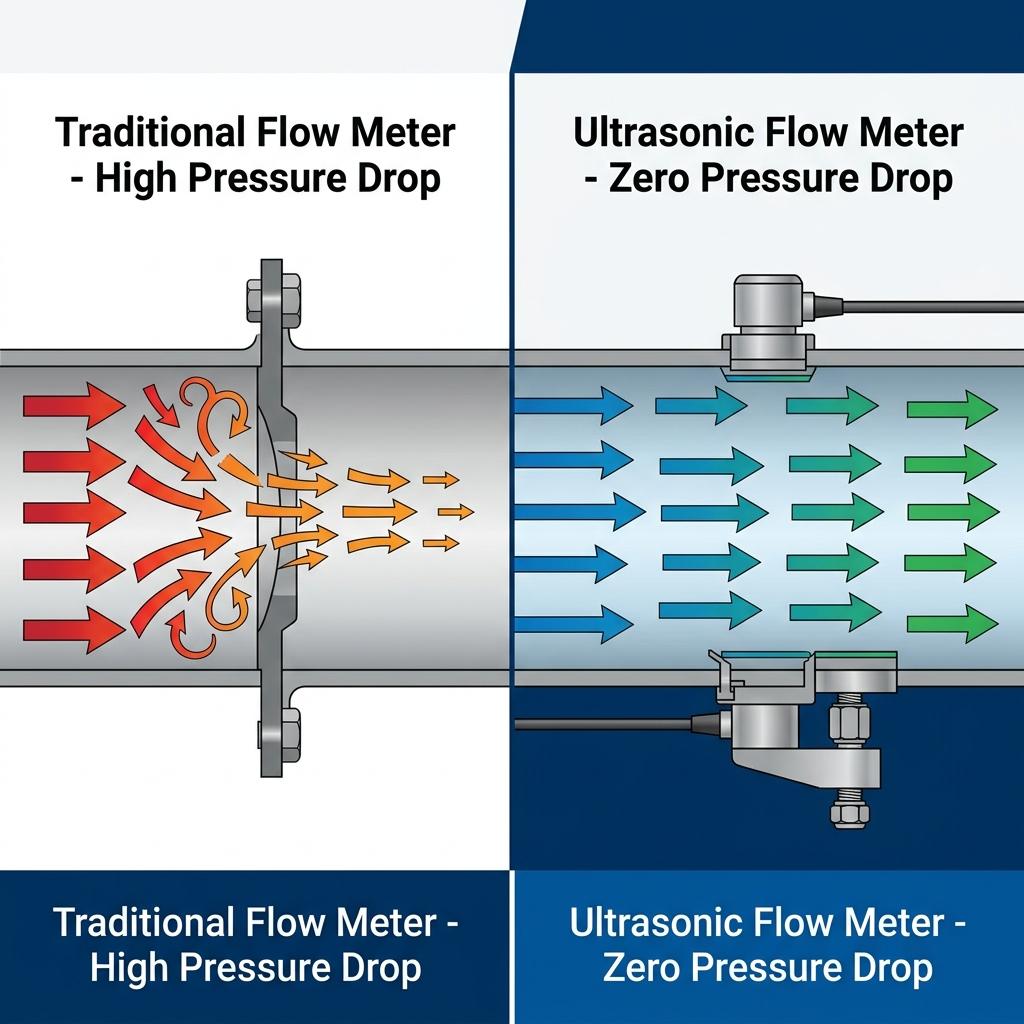
| Pressure Drop | None | Moderate | Low | None |
| Media Requirement | Conductive liquids (≥5 μS/cm) | Clean, low-viscosity liquids | Any liquid | Any liquid |
| Best Pharma Application | WFI, CIP solutions, conductive APIs | Filling, dosing | High-value APIs, mass measurement | Verification, temporary measurement |
| Cost | Medium | Low-Medium | High | Medium |
| Wide Range (Turndown) | 150:1 | 10:1 | 100:1 | 100:1 |
Electromagnetic Flow Meters — The Workhorse
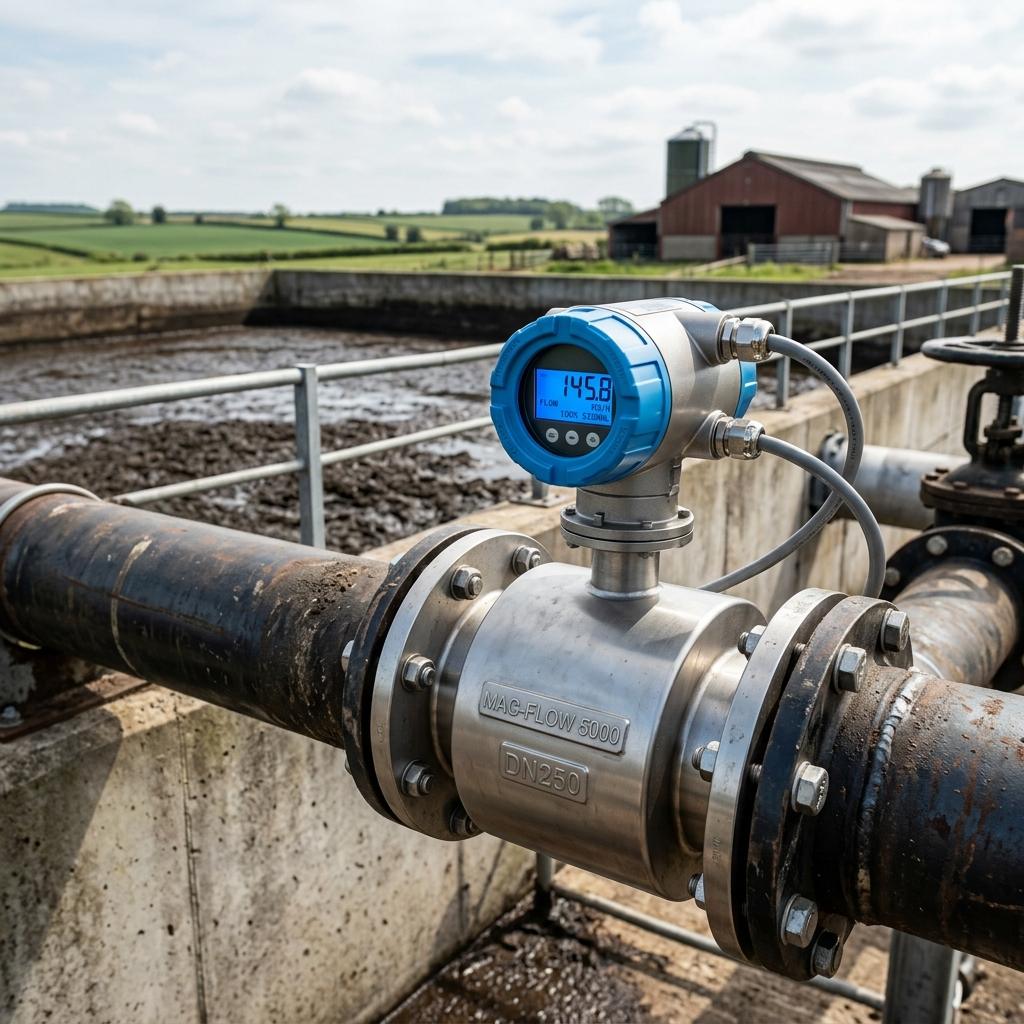
Electromagnetic flow meters (also known as mag meters) are the most widely used flow sensors in pharmaceutical manufacturing. Based on Faraday’s law of electromagnetic induction, they measure the flow rate of conductive liquids with high accuracy and no moving parts. Learn more about how electromagnetic flowmeters work: Faraday’s Law in Action.
Why they dominate pharma:
- Zero pressure drop — critical for gravity-fed WFI systems
- No moving parts — nothing to break, contaminate, or require replacement
- Excellent accuracy (±0.5%, custom ±0.2%) — accurate, reliable flow measurement
- Wide range of pipe sizes (DN3 to DN3000) and flow rates
- Tri-Clamp sanitary connections available
- PTFE/PFA liners withstand CIP chemicals and SIP temperatures
Limitation: Cannot measure non-conductive liquids (pure solvents, some organic APIs). For these applications, consider Coriolis or clamp-on ultrasonic alternatives.
Clamp-On Ultrasonic Flow Meters — The Zero-Risk Option
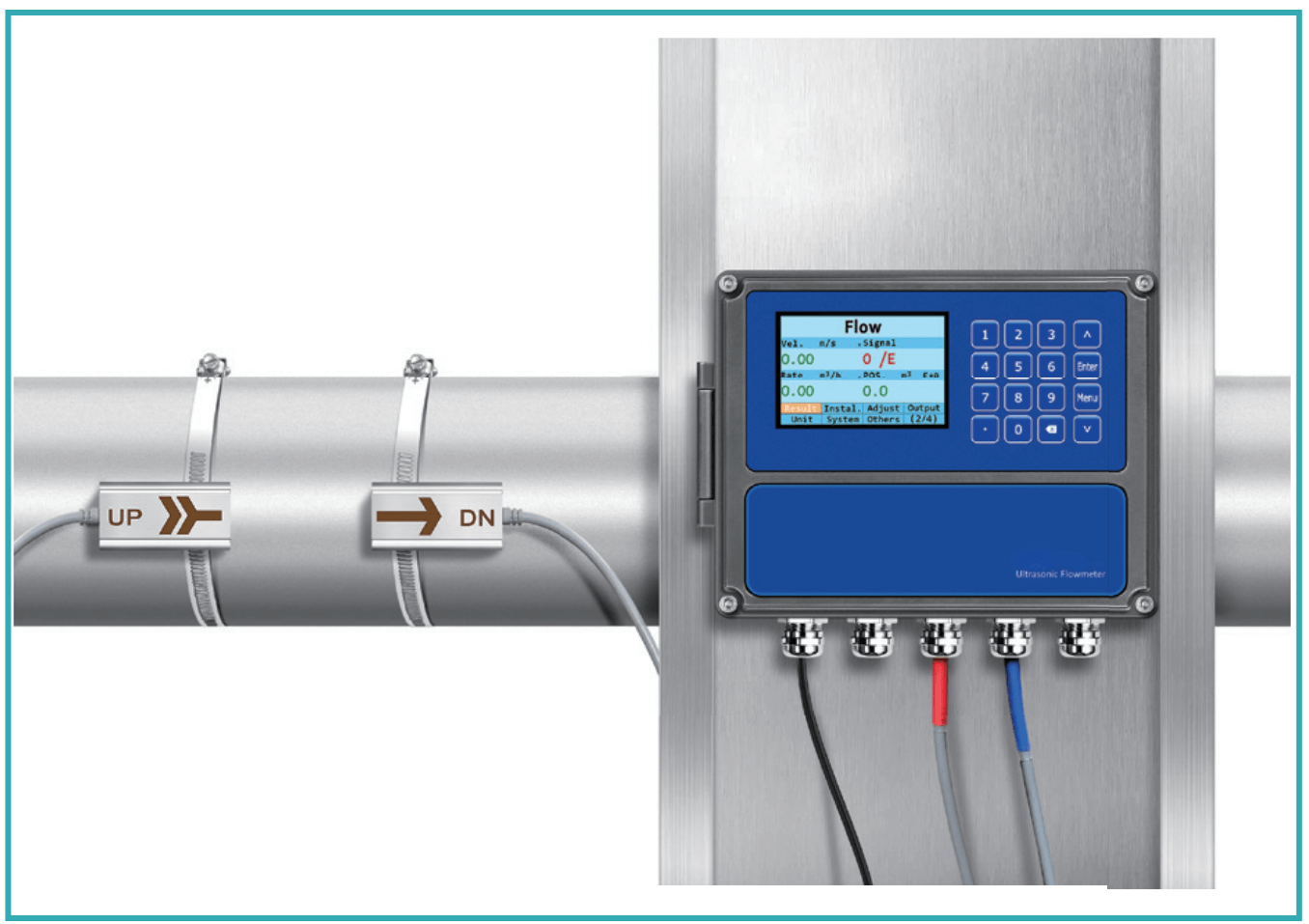
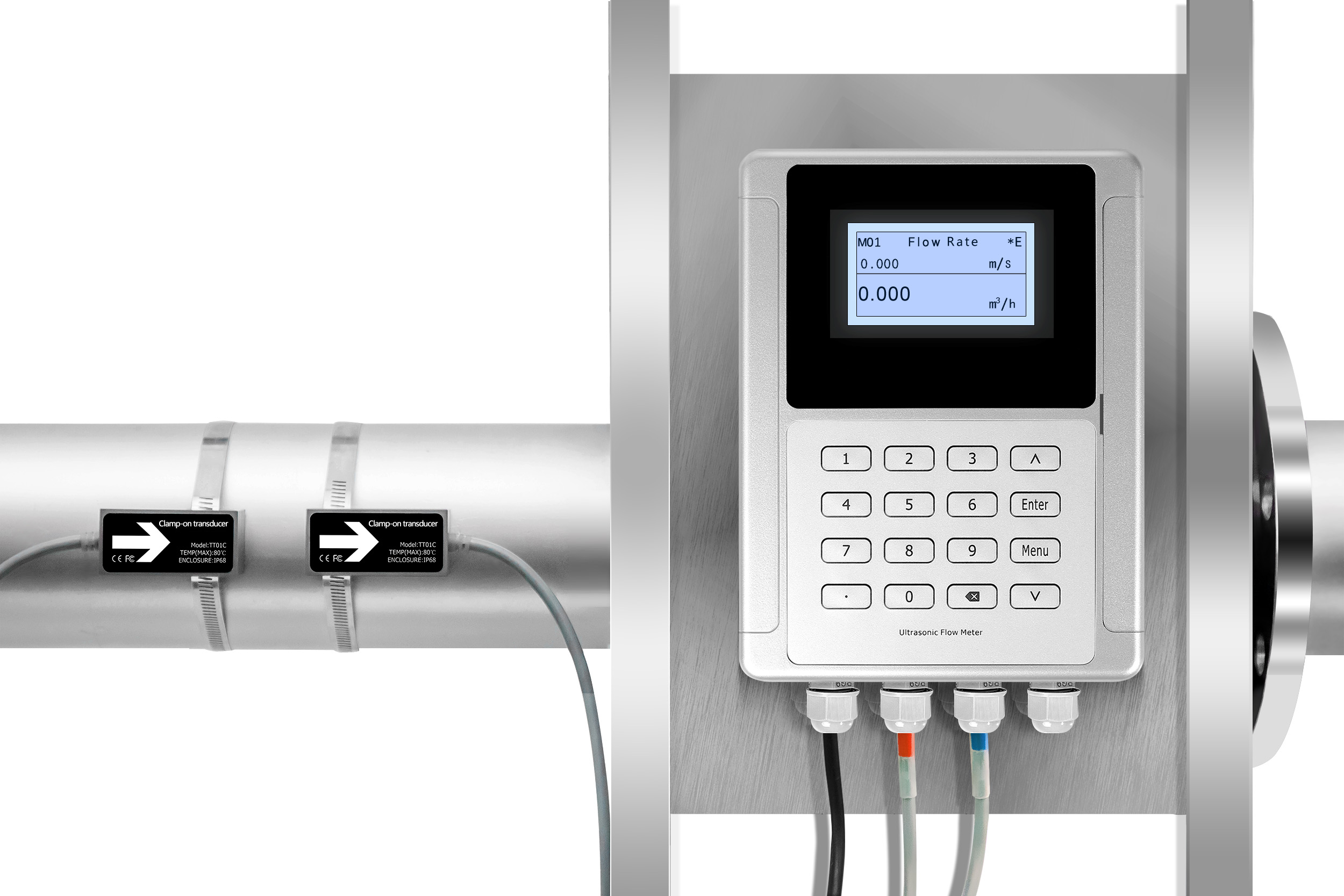
For pharmaceutical applications where zero product contact is paramount, clamp-on ultrasonic flow meters offer an unbeatable advantage: the flow sensors measure from outside the pipe, never touching the process fluid. This completely eliminates contamination risk and simplifies validation.
This technology is particularly valuable for:
- Retrofitting existing validated systems without breaking the pipe
- Temporary verification of installed flow meters
- Ultra-pure water systems where even 316L contact is undesirable
Our Clamp-On Ultrasonic Flow Meter Complete Guide covers the full technical details.
Sanitary Turbine Flow Meters — The Precision Option
Turbine flow meters remain the preferred choice for pharmaceutical filling and dosing applications where high accuracy and repeatability are critical. With repeatability as good as 0.05%, they excel at cost-effective batch control.
Key consideration: Turbine meters have moving parts (the rotor), which means:
- More frequent maintenance and calibration
- Potential for rotor material particles entering the product stream
- Not suitable for fluids with suspended solids
For a deeper comparison, see our article on How Do Turbine and Electromagnetic Flow Meters Compare?
CIP/SIP Compatibility: The Hidden Selection Criterion
Clean-in-Place (CIP) and Sterilize-in-Place (SIP) compatibility is perhaps the single most important — and most frequently overlooked — criterion when selecting flow meters for pharmaceutical applications.
CIP Requirements
CIP procedures typically use the following cleaning agents, and your flow meter must resist all of them:
| CIP Stage | Chemical | Concentration | Temperature | Duration |
|---|---|---|---|---|
| Pre-rinse | Purified water | — | 20-25°C | 5-10 min |
| Alkaline wash | NaOH (caustic) | 0.5-2.0% | 60-80°C | 20-30 min |
| Acid rinse | Phosphoric/Citric acid | 0.5-1.0% | 50-60°C | 15-20 min |
| Final rinse | WFI | — | 80-90°C | 10-15 min |
SIP Requirements
Steam-in-Place sterilization is more demanding:
- Temperature: 121-135°C saturated steam
- Pressure: 1.0-2.5 bar
- Duration: 20-30 minutes minimum
- Thermal cycling: Multiple cycles per week
Lessons from the Field: A well-documented failure pattern in pharma and chemical plants involves EPDM rubber liners on fermentation or CIP media lines. Under daily CIP cycles (NaOH at 60-80°C) followed by weekly SIP sterilization (135°C steam), rubber liners typically show visible cracking and discoloration within 6-12 months. Upgrading to electromagnetic flow meters with PTFE liners and Hastelloy C electrodes eliminates this degradation entirely. The liner material impact on flow meter performance cannot be overstated in pharmaceutical applications.
Selection Guide: Matching Flow Meter to Your Pharmaceutical Application
Use this decision framework to select the right flow meter technology for your specific application:
Decision Matrix by Application
| Application | Recommended Technology | Key Specifications | Why |
|---|---|---|---|
| WFI Loop Monitoring | Electromagnetic (Tri-Clamp) | DN25-DN100, 316L, PFA liner, ±0.5% | Conductive water, zero pressure drop, CIP/SIP proof |
| API Batch Dosing | Coriolis or Electromagnetic | High accuracy required, batch control | Mass measurement for high-value ingredients |
| CIP Solution Flow | Electromagnetic (Tri-Clamp) | Hastelloy C electrodes, PTFE liner | Resists NaOH, acids at elevated temperatures |
| Bioreactor Feed | Electromagnetic or Ultrasonic | Low flow rates, sterile path | No moving parts, maintains sterility |
| Filling & Packaging | Sanitary Turbine | ±0.5%R, 0.05% repeatability, Tri-Clamp | Highest repeatability for precise dosing |
| Existing System Verification | Clamp-On Ultrasonic | External mounting, portable option | Non-invasive, no validation impact |
| Organic Solvent Lines | Coriolis or Clamp-On Ultrasonic | Non-conductive media capability | EMF cannot measure non-conductive fluids |
Flow Meter Sizing Considerations
For pharmaceutical piping (typically DN15 to DN150), keep these guidelines in mind:
- Optimal flow velocity: 1-3 m/s for electromagnetic flow meters
- Minimum velocity: 0.3 m/s (below this, accuracy degrades)
- Maximum velocity: 10 m/s (above this, liner erosion risk increases)
Our electromagnetic flow meters cover the full pharmaceutical range with pipe diameters from DN3 to DN3000. For help choosing the right size, see How Do I Choose the Right Flow Meter Size?
Technical Specifications — Soaring Pharmaceutical-Grade Flow Meters
When selecting flow meters for your cGMP facility, having the exact technical specifications on hand is critical for the engineering and validation teams. Here are the parameters for our most commonly deployed pharmaceutical flow meters:
Sanitary Electromagnetic Flow Meter (Tri-Clamp Type)
Our flagship solution for WFI, CIP, and general aqueous pharmaceutical processes.
- Accuracy: ±0.5% standard (±0.2% custom available for critical dosing)
- Wetted Materials: 316L Stainless Steel
- Liner Options: PTFE or PFA (materials commonly used in FDA-regulated pharmaceutical applications)
- Electrode Options: 316L SS, Hastelloy C, Titanium (Tantalum, Platinum available on request)
- Process Connection: Tri-Clamp (Sanitary clamp)
- Protection Class: IP65 (Standard) / IP68 (Submersible option available)
- Process Temperature: -40°C to 180°C (Fully supports 135°C SIP sterilization)
- Nominal Pressure: Up to 42MPa (depending on connection size)
- Output Signals: 4-20mA, Pulse, Frequency
- Communication Protocols: HART, RS-485 (Modbus)
- Turndown Ratio: 150:1
Clamp-On Ultrasonic Flow Meter
The preferred choice for non-invasive measurement and zero-contamination risk applications.
- Accuracy: ±1% of reading
- Installation Method: External clamp-on (no pipe cutting required)
- Pipe Size Range: DN15 to DN1200
- Protection Class: IP65 for main unit, IP68 for transducers
- Fluid Compatibility: Any sonically conductive liquid (including non-conductive solvents)
Sanitary Turbine Flow Meter
Optimized for high-speed filling, batching, and dosing lines.
- Accuracy: ±0.5%R (±0.2%R custom)
- Repeatability: 0.05% to 0.2% (ideal for batch consistency)
- Materials: 304 or 316 Stainless Steel
- Process Connection: Tri-Clamp
IQ/OQ/PQ Validation: What Documentation You Need
Purchasing a sanitary flow meter is only half the battle. If you cannot prove to an FDA auditor that the equipment is installed correctly and functioning as intended, it is essentially useless. This is where validation documentation comes in.
When ordering flow meters for a GMP environment, ensure your supplier provides a comprehensive documentation package to support your Installation Qualification (IQ), Operational Qualification (OQ), and Performance Qualification (PQ) activities.
Essential Documentation Checklist:
- Material Traceability Certificates (EN 10204 3.1): Proof that the wetted parts are indeed 316L stainless steel, tracing back to the original steel mill melt.
- Surface Finish Certificates: Verification that the electropolished surfaces meet the Ra ≤ 0.8 μm specification.
- Elastomer Certifications: Documentation proving that all gaskets and liners meet FDA (21 CFR 177) and USP Class VI requirements for biocompatibility.
- Calibration Certificates: Factory calibration data, traceable to national or international standards (e.g., NIST), confirming the meter meets its stated accuracy.
- Welding Logs: Proof of orbital welding and borescope inspections for crevice-free joints.
At Soaring Instrument, we understand that validation is a significant cost and effort for our pharmaceutical clients. We provide comprehensive, audit-ready documentation packages with every sanitary flow meter to streamline your IQ/OQ/PQ processes.
Troubleshooting Common Issues in Sanitary Flow Measurement
Even with the best equipment, pharmaceutical environments present unique challenges. Here are the most common issues we encounter during field service calls, and how to resolve them:
| Symptom | Probable Cause | Expert Solution |
|---|---|---|
| Zero drift after CIP cycle | Sudden temperature change causing thermal shock; residual CIP chemicals coating electrodes. | Allow meter to return to ambient temperature. Ensure final WFI rinse is sufficient. Use Hastelloy C electrodes for aggressive CIP. |
| Erratic readings during SIP | Condensation in transmitter housing; exceeding temperature limits of liner. | Ensure proper IP68 sealing if washdowns occur. Verify liner is PFA/PTFE (rated for 180°C), not rubber. |
| Noisy signal in purified water | Low conductivity (WFI is typically <1 μS/cm), which is below the threshold for standard mag meters. | If conductivity is below 5 μS/cm, switch to a Coriolis or Clamp-On Ultrasonic flow meter. |
| Flow reading drops to zero unexpectedly | Entrained air bubbles or empty pipe condition. | Ensure the meter remains full of liquid at all times. Install in vertical pipes with upward flow, or in low points of horizontal runs. |
Frequently Asked Questions (FAQ)
1. What makes a flow meter “FDA compliant”?
The FDA does not certify individual flow meters. A flow meter is considered suitable for an FDA-regulated environment if its design, materials (e.g., 316L SS, USP Class VI elastomers), and cleanability comply with cGMP requirements (21 CFR Part 211) and industry standards like ASME BPE or 3-A.
2. What is the difference between 3-A and ASME BPE certification?
3-A Sanitary Standards originated in the dairy and food industries, focusing heavily on cleanability and preventing bacterial growth. ASME BPE (Bioprocessing Equipment) was developed specifically for the biopharmaceutical industry and has more stringent requirements for material traceability, weld quality, and specific surface finishes (e.g., Ra ≤ 0.8 μm).
3. Can clamp-on ultrasonic meters be used in pharmaceutical applications?
Yes, and they are increasingly popular. Because the sensors mount to the outside of the pipe, there is zero contact with the product. This eliminates contamination risk, avoids the need to break the sterility of the piping loop, and significantly reduces validation efforts.
4. How often should sanitary flow meters be calibrated?
Calibration frequency depends on your facility’s internal quality procedures and the criticality of the measurement. Typically, flow meters used in critical quality attribute (CQA) processes (like API dosing) are calibrated every 6 to 12 months. Meters in utility applications may be calibrated every 1 to 2 years. Read more about Flow Meter Calibration Standards.
5. What surface finish is required for pharmaceutical flow meters?
For product-contact surfaces, the industry standard (and ASME BPE requirement) is a maximum surface roughness of Ra ≤ 0.8 μm (32 micro-inch). For critical biopharmaceutical applications, an electropolished finish of Ra ≤ 0.5 μm (20 micro-inch) is often specified.
Conclusion
Selecting a flow meter for pharmaceutical manufacturing requires looking far beyond the basic flow range and accuracy specs. The real costs — and risks — lie in FDA compliance, CIP/SIP survivability, and validation documentation.
By insisting on true sanitary design features like 316L stainless steel, electropolished finishes, and proper Tri-Clamp connections, you protect your product quality and ensure a smooth audit process.
Need help selecting an FDA-compliant flow meter for your next project?
The engineering team at Soaring Instrument has extensive experience equipping pharmaceutical facilities with robust, accurate, and fully documented flow measurement solutions.
Contact us today to discuss your specific application and regulatory requirements.
Related Articles
- Magnetic Flow Meter: How It Works & Selection Guide
- Electrode Materials Face-Off: Titanium vs. Hastelloy vs. Platinum
- How Does Liner Material Impact Flow Meter Performance?
- What is the Standard for Calibration of Flowmeter?
- Flow Meter for Corrosive Liquids: Why Clamp-On Wins