
Clamp-On Ultrasonic BTU Meters for HVAC & Energy Metering

Clamp-on BTU meter on a chilled water supply/return pair — no pipe cutting, no system shutdown Quick Answer: Clamp-on ultrasonic BTU meters combine transit-time flow measurement with PT1000 temperature sensors on the supply and return lines to calculate real-time thermal energy — without cutting any pipe or stopping the system. Soaring Instrument offers three configurations […]
Say Goodbye to Clogs: How Mag Flow Meters Handle Sludge & Slurries
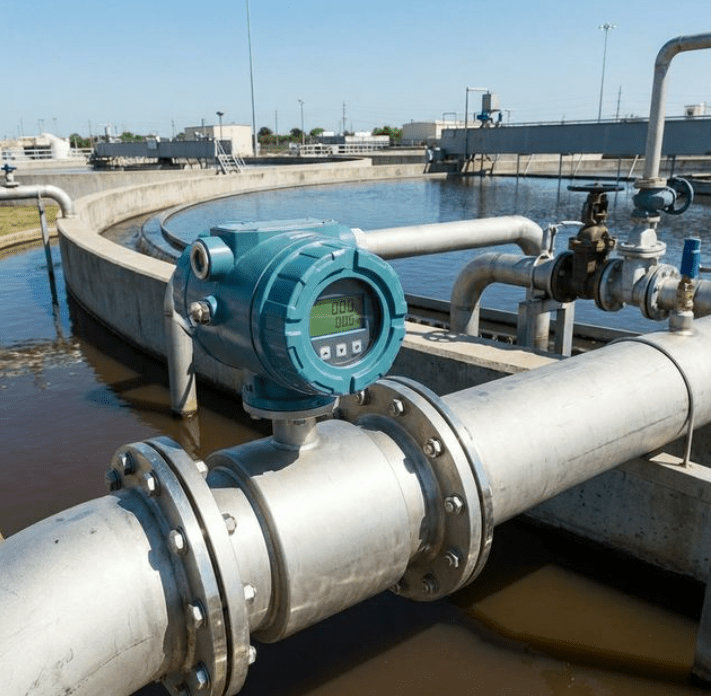
Every wastewater treatment operator knows the frustration: you’ve just replaced a clogged Venturi meter on your return activated sludge line—for the third time this year. At Soaring Instrument, we’ve worked with dozens of WWTPs across Asia and seen this exact scenario play out. The cost? Not just equipment, but hours of unreliable flow data affecting […]
Flow Meter for Corrosive Liquids: Why Clamp-On Wins
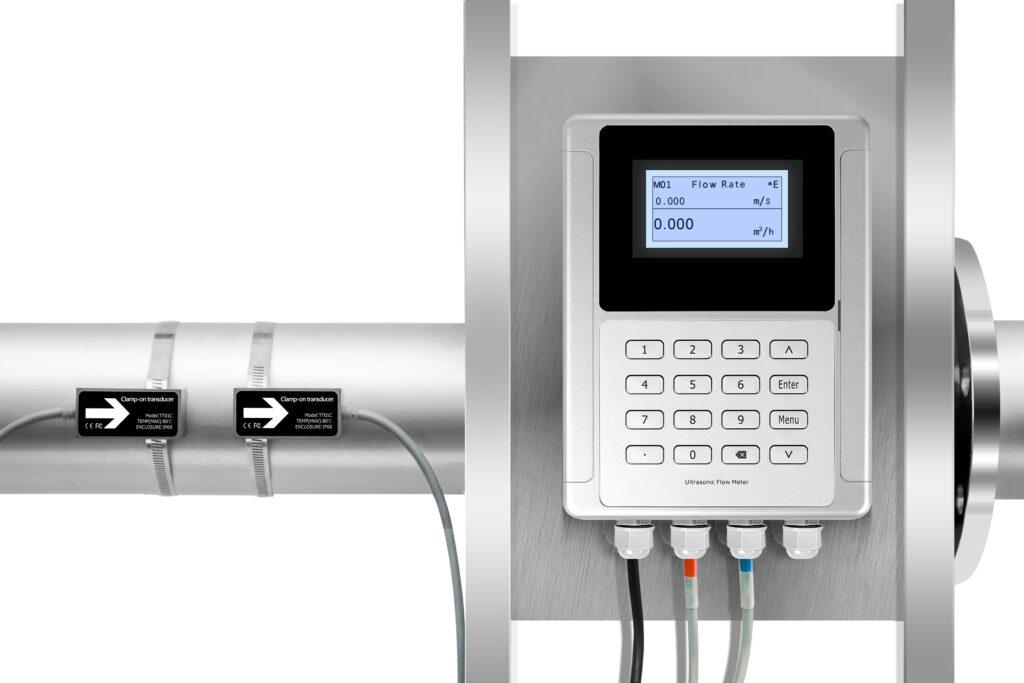
Ever watched a sulfuric acid leak destroy a $15,000 inline flow meter—and narrowly miss injuring an operator? In our 15+ years installing flow measurement solutions across chemical plants in Shanghai and beyond, we’ve seen this nightmare scenario play out more times than we’d like to admit. Quick Answer: For measuring corrosive liquids like acids, caustics, […]
What Fluids Can Ultrasonic Flow Meters Measure? A Complete Compatibility Guide
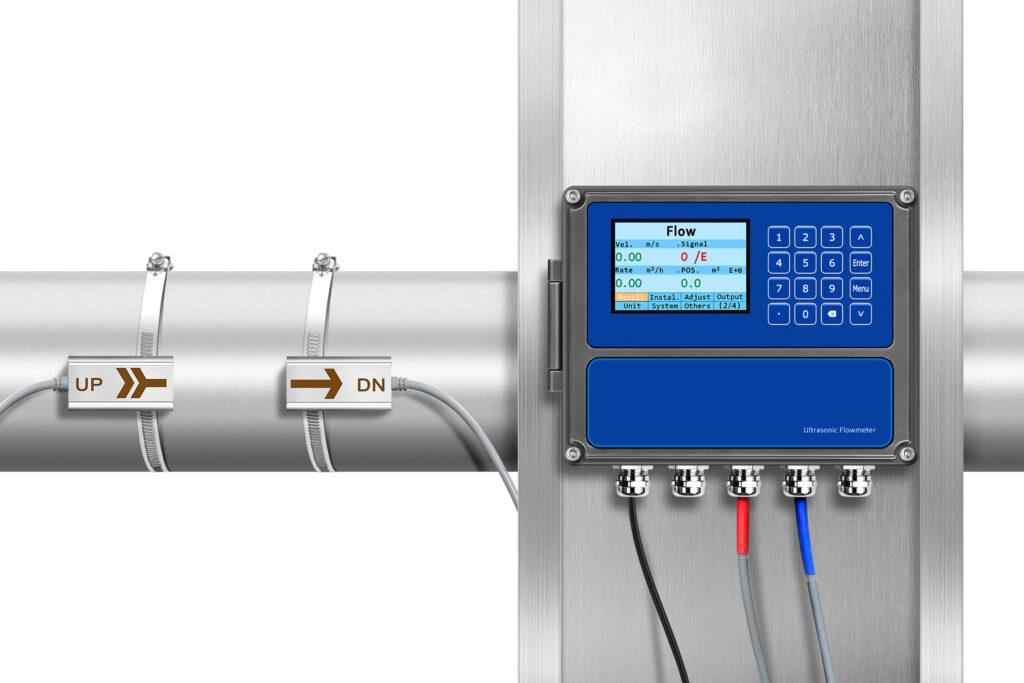
Have you ever wondered why your ultrasonic flow meter works perfectly on clean water but completely fails on your chemical slurry line? In our 15+ years of field experience at manufacturing facilities across Shanghai and beyond, we’ve seen engineers make costly mistakes by assuming all fluids are compatible with ultrasonic flow measurement technology. Quick Answer: […]
Small Pipe Ultrasonic Flow Meter: Complete Guide for DN10-DN40 Applications
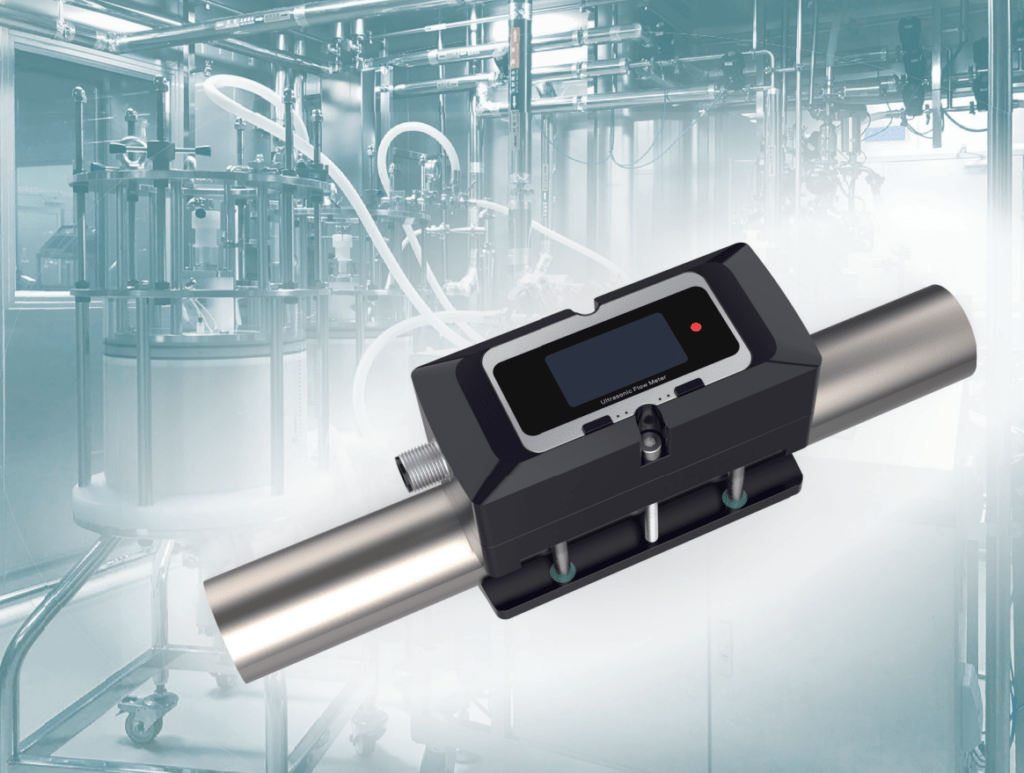
Struggling to find accurate flow measurement solutions for small diameter pipes? You’re not alone—87% of engineers report challenges when measuring flow in pipes below DN50. Quick Answer: Small pipe ultrasonic flow meters (DN10-DN40) use transit-time technology with specialized compact transducers to measure liquid flow rates from 1-400 LPM without cutting pipes. Modern clamp-on designs like […]
Insertion Vortex Flow Meter: Save 50% on Large Pipes (DN200+)
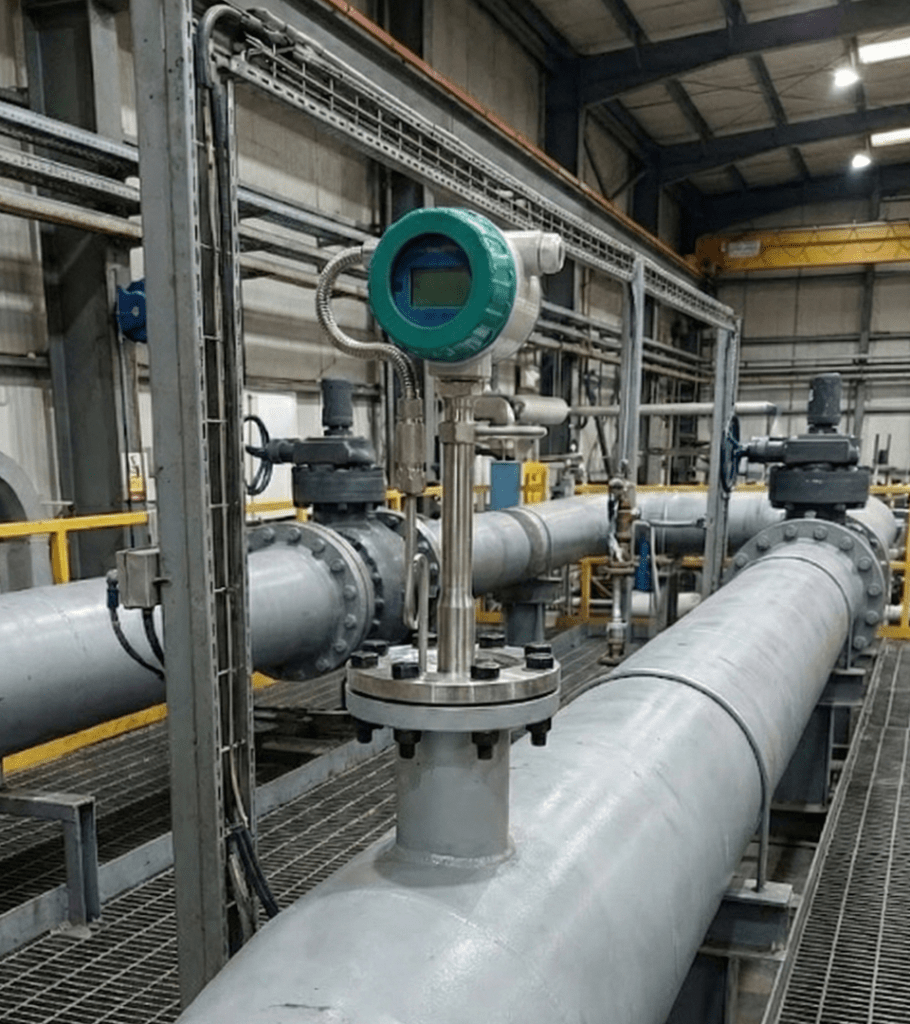
When a paper mill asked us to quote flow meters for their DN400 steam line, they expected to pay $15,000+ for a full-bore inline vortex meter. We proposed an insertion vortex flow meter instead — at less than half the cost, with comparable accuracy. This is the reality for large pipe applications: insertion vortex flow […]
Vortex Flow Measurement: How It Works & When It Fails
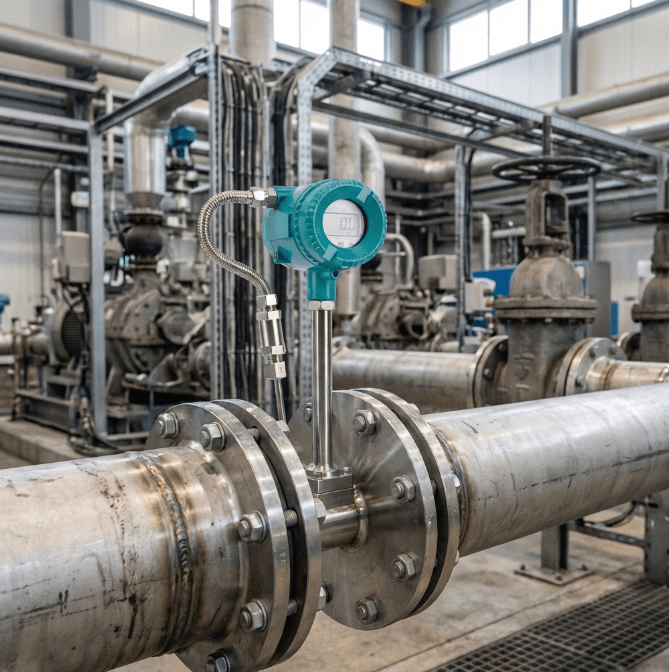
When engineers ask us for a flow meter that can handle steam, compressed air, and liquid in the same facility, our first recommendation is almost always vortex flow measurement technology. Why? Because vortex meters have no moving parts, work across a wide range of Reynolds numbers, and can accurately measure liquid, gas, and steam — […]
Steam Flow Transmitter: Signals, DCS Integration & Specs
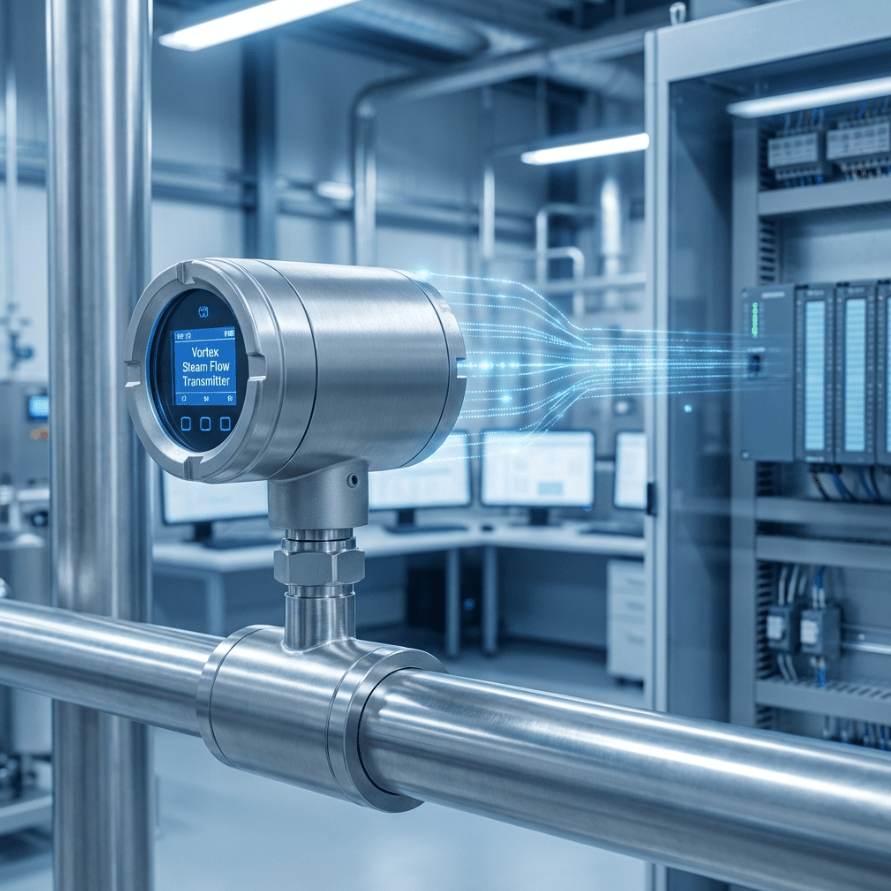
In our years of supporting steam measurement systems, the most common question we receive after installation is: "How do I get the flow signal into my DCS?" Many engineers install a steam flow meter only to realize the raw sensor signal cannot be directly read by their control system. The solution? A steam flow transmitter […]
Magnetic Flow Meter: How It Works & Selection Guide
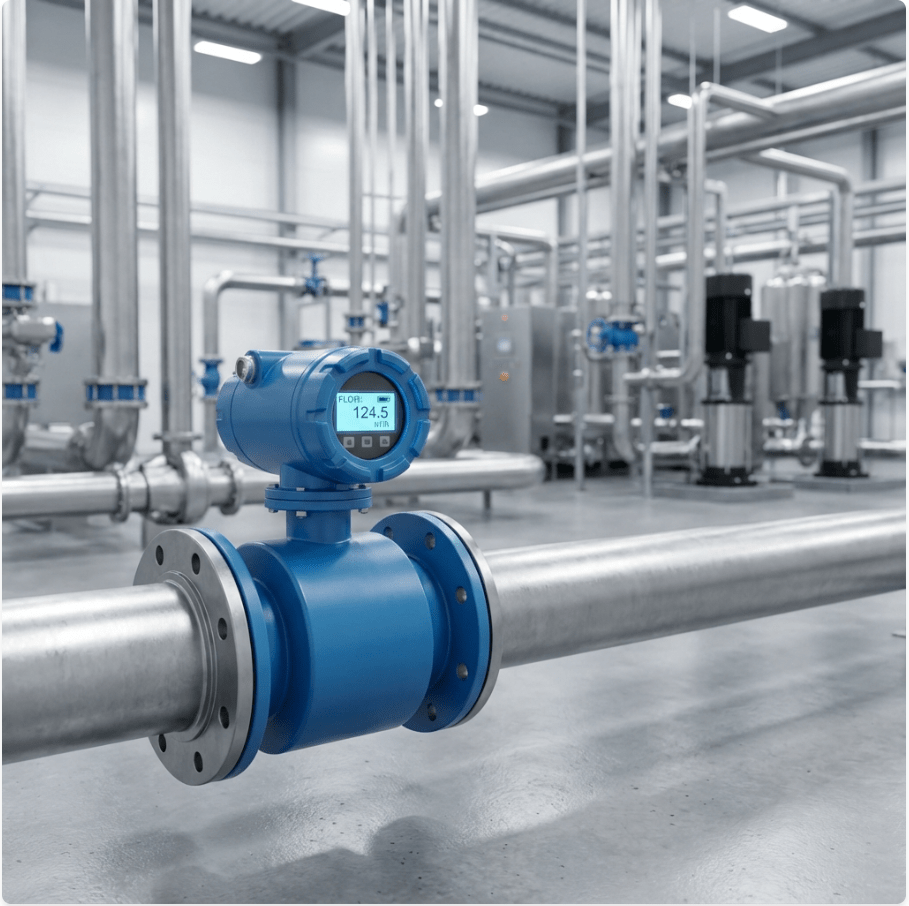
A magnetic flow meter (also known as a magmeter or electromagnetic flow meter) is a precision volumetric flow measurement device designed for conductive liquids in closed pipes. Distinguished by its obstruction-free design, the magnetic flow meter creates virtually no additional pressure drop and contains no moving parts to wear out. It is the industry standard […]
Wall Mount Ultrasonic Flow Meter: Built to Last with Metal & Color TFT
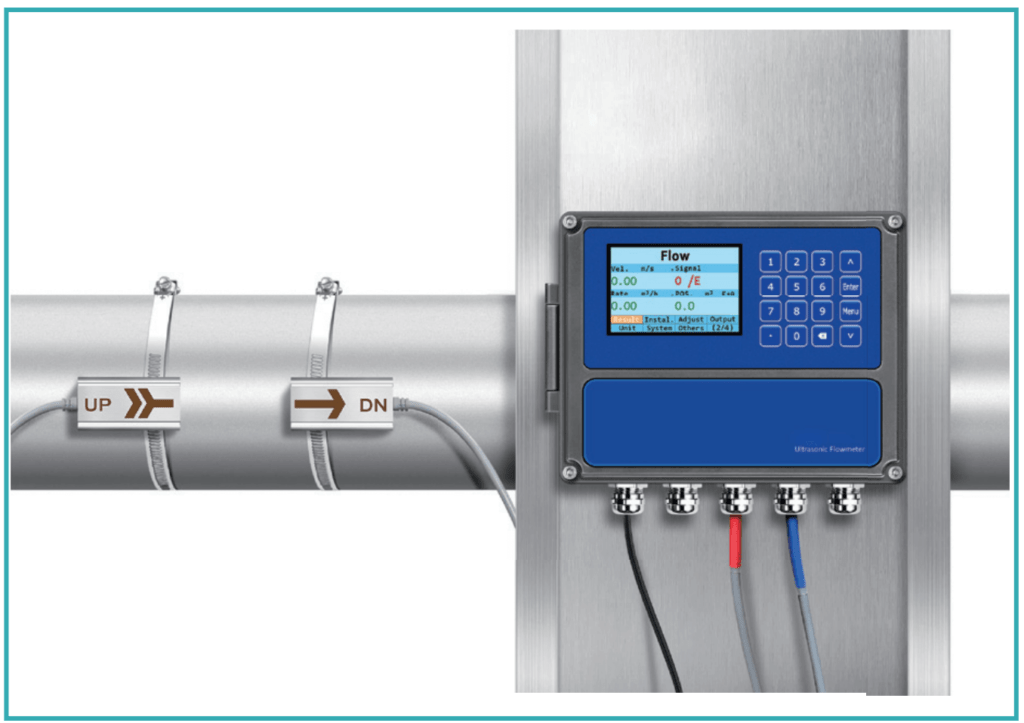
The majority of wall mount ultrasonic flow meters on the market today still use a decades-old design: a plastic enclosure with a small, monochrome LCD screen. While this configuration gets the job done initially, it often fails to meet the demands of long-term industrial use. Plastic degrades. Screens become unreadable. And technicians waste valuable time […]
The Complete Guide Of Ultrasonic Flow Meter
Last month, a chemical plant in Texas lost over $50,000 in product due to inaccurate flow measurement. Their traditional mechanical meter had been quietly failing, leading to incorrect batch mixing. This common scenario highlights why choosing the right flow meter is crucial. Ultrasonic flow meters use sound wave technology to measure liquid flow, offering non-invasive […]
How Accurate Are Ultrasonic Flow Meters?
Last month, a water utility manager asked me why their new ultrasonic flow meter showed different readings from their old mechanical meter. The answer lies in understanding true measurement accuracy. Modern ultrasonic flow meters can achieve accuracy rates of ±0.5% to ±1.0% of reading under optimal conditions. Their accuracy depends on installation quality, fluid properties, […]
What Are Ultrasonic Flow Meters Used For?
A facility manager once lost $50,000 monthly due to undetected water leaks. Without proper flow monitoring, businesses face significant losses in resources and revenue. Ultrasonic flow meters are used for non-invasive flow measurement in industrial processes, municipal water systems, oil and gas operations, and HVAC systems. They provide accurate, real-time flow data without disrupting the […]
What Is An Electromagnetic Flow Meter For Wastewater?
Many facilities struggle with accurate wastewater flow measurement, leading to inefficient operations and compliance issues. An electromagnetic flow meter uses Faraday’s law of electromagnetic induction to measure conductive fluid flow in pipes, providing accurate measurements for wastewater applications. Electromagnetic Flow Meter Basic Structure Let me explain how electromagnetic flow meters work in wastewater applications, based […]
What Are The Different Types Of Wastewater Flow Meters?
Choosing the wrong flow meter for wastewater applications can lead to measurement errors, maintenance issues, and increased operational costs. Wastewater flow meters include magnetic flowmeters, ultrasonic meters, area-velocity sensors, and open channel measurement devices, each designed for specific applications. Let me share my experience with different types of wastewater flow meters and their applications. What […]
How To Measure The Flow Rate Of Wastewater?
Inaccurate wastewater flow measurement leads to treatment inefficiencies, compliance issues, and increased operational costs. To measure wastewater flow rate, use appropriate flow meters like magnetic, ultrasonic, or open channel devices, combined with proper installation and regular calibration. Let me share my experience in implementing effective wastewater flow measurement solutions. How Do You Measure Wastewater Flow? […]
What Is A Flow Meter In Wastewater Treatment?
Inefficient wastewater treatment can lead to environmental violations and increased operational costs without proper flow measurement. A flow meter in wastewater treatment is a device that measures the volume of water passing through a pipe or channel, crucial for process control and regulatory compliance. I’ve worked with numerous wastewater treatment plants, and I’ll share my […]
How To Calculate Wastewater Flow Rate?
Many wastewater treatment operators struggle with inaccurate flow measurements, leading to inefficient treatment processes and compliance issues. To calculate wastewater flow rate, you can use the velocity-area method (Q = V × A), where Q is flow rate, V is fluid velocity, and A is pipe cross-sectional area. > Wastewater Flow Rate Calculation Methods Let […]
Which Liquid Cannot Be Measured By The Magnetic Flowmeter?
Many industrial users waste money on magnetic flowmeters only to discover they won’t work with their non-conductive liquids like oils or pure water. Magnetic flowmeters cannot measure non-conductive liquids such as oils, hydrocarbons, ultra-pure water, and most organic chemicals due to their requirement for fluid conductivity above 5µS/cm. Non-conductive Liquids and Magnetic Flowmeters Let me […]
Does Conductivity Affect Magnetic Flow Meter?
Many plant operators face unexpected measurement failures when using magnetic flow meters with low-conductivity fluids. Fluid conductivity directly affects magnetic flow meter performance, with a minimum requirement of 5 μS/cm for standard meters. Lower conductivity leads to unreliable measurements or complete meter failure. I’ve seen numerous cases where understanding conductivity requirements could have prevented costly […]
What Is The Standard For Calibration Of Flowmeter?
Many industrial users struggle with meeting regulatory requirements due to incorrect flow meter calibration practices. Flow meter calibration standards primarily follow ISO 17025, ISO/IEC 9001, and NIST guidelines, requiring traceability, documented procedures, and specified accuracy limits. Flow Meter Calibration Standards Overview Let me share my experience in implementing calibration standards across various industries. What Is […]
How Do You Calculate Sewage Pipes?
Incorrect sewage pipe calculations can lead to costly overflows, backups, and environmental hazards. Sewage pipe calculations involve determining pipe diameter based on flow rate, slope, roughness coefficient, and expected peak loads using Manning’s equation. Sewage Pipe Calculation Methods Let me share my experience in designing and implementing sewage systems across various projects. How To Calculate […]
What Is The Best Flow Meter For Sludge?
Measuring sludge flow accurately can be challenging due to its varying consistency and high solid content. For sludge applications, electromagnetic flow meters are typically the best choice due to their ability to handle high solid content, no moving parts, and maintenance-friendly design. Sludge Flow Meter Application Let me share insights from my experience in implementing […]
How Do You Measure Sewer Flow?
Accurate sewer flow measurement is crucial for preventing environmental disasters and maintaining public health standards. Sewer flow measurement typically involves using specialized flow meters designed for wastewater, including ultrasonic flow meters, area-velocity meters, and electromagnetic flow meters. Sewer Flow Measurement Methods Let me share my experience in implementing various sewer flow measurement solutions across different […]
How To Calculate K-Factor For Vortex Flow Meter?
Calculating K-factor wrongly can lead to significant measurement errors and costly process control issues. The K-factor in vortex flow meters represents the number of pulses generated per unit volume of fluid flow, typically expressed as pulses/m³ or pulses/gallon. K-Factor Calculation Diagram Let me share my experience with K-factor calculations and calibrations from numerous field installations. […]
What Are The Essential Guidelines For Vortex Flow Meter Installation?
Factory teams often face challenges when installing vortex meters, leading to inaccurate measurements and unnecessary downtime. Proper installation makes all the difference. Vortex flow meters require 15 pipe diameters (15D) upstream and 5D downstream straight piping, proper orientation based on fluid type, adequate supports to minimize vibration, and environmental protection from extreme conditions. The minimum […]
What Is The Best Location For Differential Pressure Sensors In Chilled Water Systems?
Poor sensor placement in chilled water systems leads to inaccurate readings and inefficient system operation. Differential pressure sensors in chilled water systems should be installed at critical points in the distribution network, typically at the most hydraulically remote load or at points representing 75-90% of the total system pressure drop. Chilled Water System Overview Let […]
How Does Differential Pressure Relate To Flow Rate?
Getting flow measurements wrong can lead to serious process control issues and inefficient operations. Differential pressure and flow rate have a square root relationship, where flow rate is proportional to the square root of the differential pressure according to Bernoulli’s principle. DP and Flow Rate Relationship Let me explain this fundamental relationship based on our […]
What Quality Control Standards Should a Transit Time Ultrasonic Flow Meter Meet?
Last month, a client lost thousands in revenue due to an uncertified flow meter failing calibration checks. Quality standards aren’t just paperwork – they’re essential for reliable measurement. Transit time ultrasonic flow meters must meet international standards like ISO 17025 for calibration, OIML R49 for water metering, and hazardous area certifications when applicable. They should […]
How to Install a Transit Time Ultrasonic Flow Meter Correctly?
Last month, I encountered a facility where improper installation caused a 15% measurement error. Correct installation is crucial for accurate flow measurement. Transit time ultrasonic flow meter installation requires proper tool selection, location planning, careful mounting, and thorough calibration. Following manufacturer guidelines and best practices ensures optimal performance. Installation Overview Diagram Performance Flow Rate ±0.03m/s~±12m/s […]
Understanding Transit Time Ultrasonic Flow Meters in High Temperature Applications: What Should You Know?
Last year, a power plant lost significant revenue when their steam flow measurements became unreliable. The culprit? They didn’t account for high-temperature effects on their ultrasonic flow meter installation. Transit time ultrasonic flow meters in high-temperature applications (above 150°C) require special considerations for material selection, temperature compensation, and installation methods. Proper setup can maintain accuracy […]
How Does a Transit-Time Ultrasonic Flow Meter Work?
At a recent chemical plant installation, we faced significant measurement errors. After investigation, I discovered the root cause wasn’t equipment failure – it was a fundamental misunderstanding of how transit-time technology works. A transit-time ultrasonic flow meter measures flow by calculating the difference in time it takes for ultrasonic signals to travel upstream versus downstream […]
Understanding Transit-Time Ultrasonic Flow Meter Diagrams: What Makes Them Essential?
A maintenance engineer once spent days troubleshooting a flow meter issue, only to realize he misinterpreted the basic installation diagram. Clear understanding saves time and money. Transit-time ultrasonic flow meter diagrams are essential technical documents that illustrate sensor placement, signal paths, and installation requirements. They help ensure accurate measurement and proper maintenance. Transit-Time Flow Meter […]
How to Calculate and Set Up an Ultrasonic Flow Meter Correctly?
Many users struggle with inaccurate flow measurements because of incorrect calculations and setups, leading to costly process control errors. Ultrasonic flow meter calculations involve measuring transit time differences or Doppler shifts, with accuracy depending on proper pipe diameter, fluid properties, and installation parameters. Flow Calculation Fundamentals Let me share my experience in helping customers achieve […]
What’s the Best Way to Maintain Your Ultrasonic Flow Meter?
Last month, a petrochemical plant lost $50,000 in product due to inaccurate measurements from a poorly maintained ultrasonic flow meter. Don’t let this happen to your facility. Effective ultrasonic flow meter maintenance requires regular calibration, physical inspection, signal verification, and data analysis. A comprehensive maintenance program should include monthly checks and annual professional calibration. Ultrasonic […]
Magnetic Flow Meter Troubleshooting: Simple Fixes for Common Problems
Frustrated with your mag meter acting up? Let’s walk through quick diagnostics before calling the technician. For basic magnetic flow meter troubleshooting: Check power supply (10-36V DC), verify full pipe (no air gaps), inspect electrodes (clean with vinegar if coated), ensure proper grounding (1-ohm resistance to earth), and confirm fluid conductivity (>5 μS/cm). Most issues […]
Electromagnetic Flow Meter Advantages and Disadvantages
Understanding the strengths and weaknesses of electromagnetic flow meters helps professionals make informed decisions about flow measurement solutions. Electromagnetic flow meters offer excellent accuracy for conductive liquids (±0.2-0.5%) with no moving parts and low maintenance requirements, but they can’t measure non-conductive fluids like oils or pure water and require minimum flow velocities around 0.3 m/s […]
How Does Temperature Affect the Performance of Electromagnetic Flow Meters
Temperature changes can significantly impact measurement accuracy. Process engineers need to understand these effects to maintain reliable flow data. Temperature affects electromagnetic flow meters by changing fluid conductivity (±1-2%/10°C), causing liner/electrode expansion (affecting calibration), and altering electronic component performance – typically limiting operation to -30°C to +180°C without compensation. Temperature Impact on EM Flow Meters […]
What Maintenance Is Required for Electromagnetic Flow Meters?
Keeping your electromagnetic flow meter in top condition ensures accurate measurements and long service life. These devices may not have moving parts, but they still need proper care. Electromagnetic flow meters require periodic electrode cleaning, verification of ground connections, and diagnostic checks to maintain accuracy. Preventive maintenance typically includes visual inspections every 3 months and […]