Inaccurate level measurements can lead to inventory discrepancies, process inefficiencies, and safety concerns in industrial applications.
Modern radar level transmitters typically achieve measurement accuracies of ±2-3mm or 0.1% of measured range, depending on the application conditions and transmitter specifications.
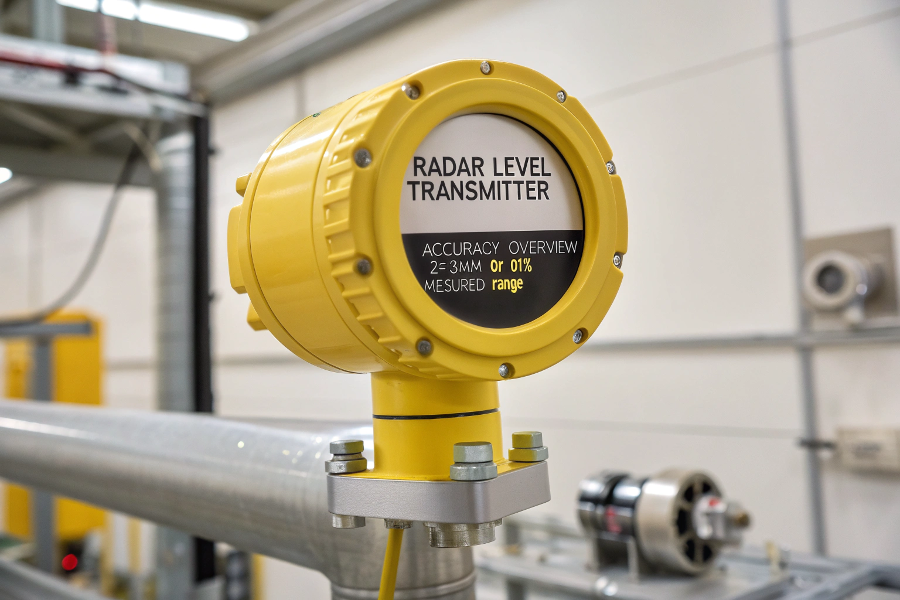
Radar Level Transmitter Accuracy Overview
Let me share my experience with radar level measurement accuracy to help you understand what’s achievable in real applications.
How Accurate is the Radar Level Transmitter?
Users often question whether radar transmitters can meet their accuracy requirements.
Most industrial radar level transmitters provide accuracies between ±2mm to ±10mm, with higher frequencies (80GHz) generally offering better accuracy than lower frequencies (6-26GHz).
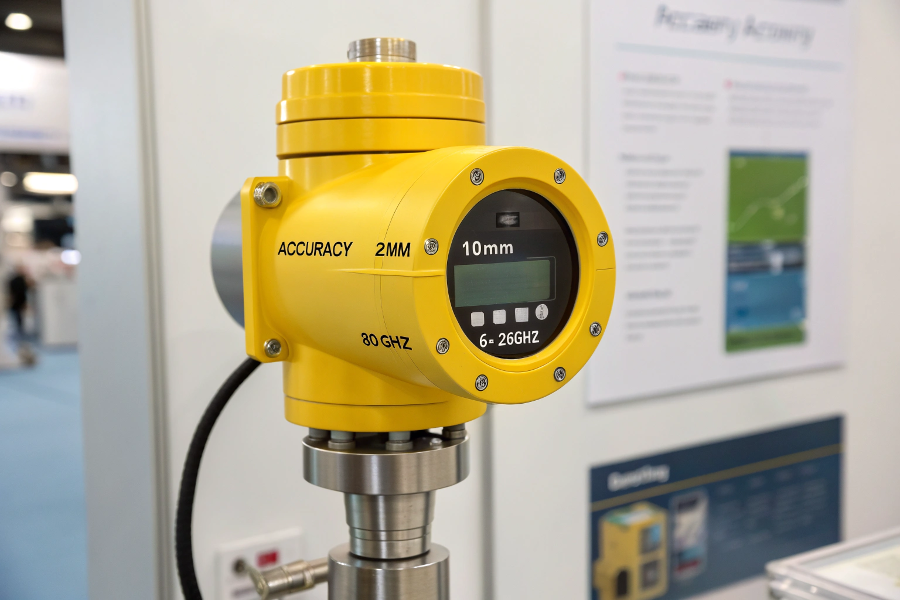
Radar Accuracy Comparison
Based on my field experience:
Accuracy Factors
Key Specifications
Parameter Typical Range Impact Factor Frequency 6-80GHz Resolution Beam angle 3-20° Signal focus Resolution 1-5mm Detail level Repeatability ±1mm Consistency Application Influences
- Process conditions
- Installation quality
- Material properties
- Environmental factors
Performance Optimization
Installation Considerations
- Proper mounting
- Nozzle requirements
- Beam interference
- Signal path
Configuration Settings
- Signal processing
- False echo mapping
- Update rate
- Damping values
Proper setup ensures optimal accuracy.
What are the Limitations of Radar Level Transmitter?
Understanding limitations helps prevent application mistakes.
Radar level transmitters face challenges with foam, turbulence, low dielectric materials, and complex tank geometries that can affect measurement accuracy.
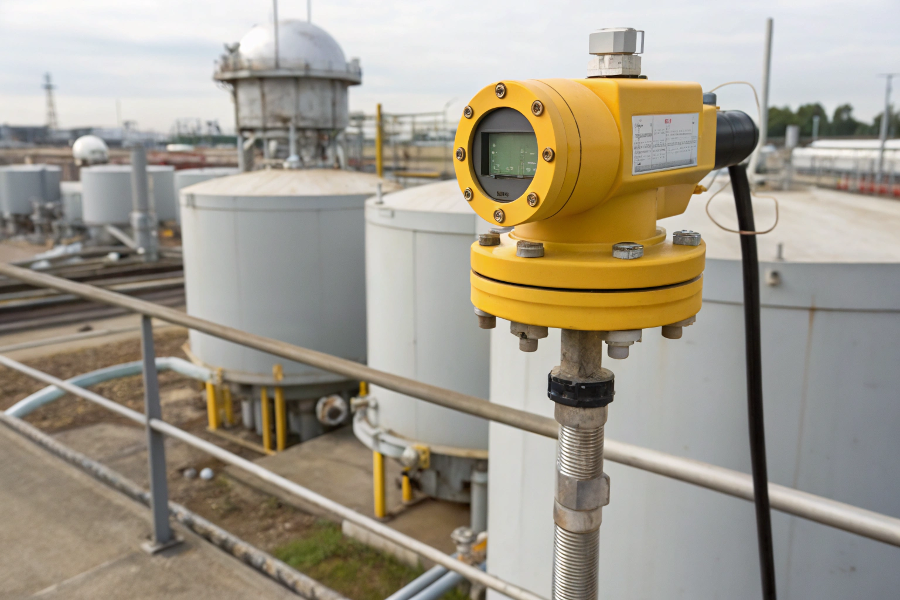
Radar Level Transmitter Limitations
From my implementation experience:
Common Limitations
Application Challenges
Challenge Impact Solution Foam Signal scatter Advanced processing Turbulence Echo distortion Damping Low DK Weak signal Larger antenna Build-up False echoes Special algorithms Environmental Factors
- Temperature changes
- Pressure variations
- Vapor presence
- Dust conditions
Mitigation Strategies
Design Solutions
- Antenna selection
- Mounting position
- Signal processing
- Protection options
Maintenance Practices
- Regular cleaning
- Performance monitoring
- Parameter adjustment
- Preventive checks
Understanding limitations enables proper application.
How Accurate is the Ultrasonic Level Transmitter?
Many users compare radar and ultrasonic technologies.
Ultrasonic level transmitters typically achieve accuracies of ±0.15% to ±0.25% of full scale, generally less precise than radar but suitable for many applications.
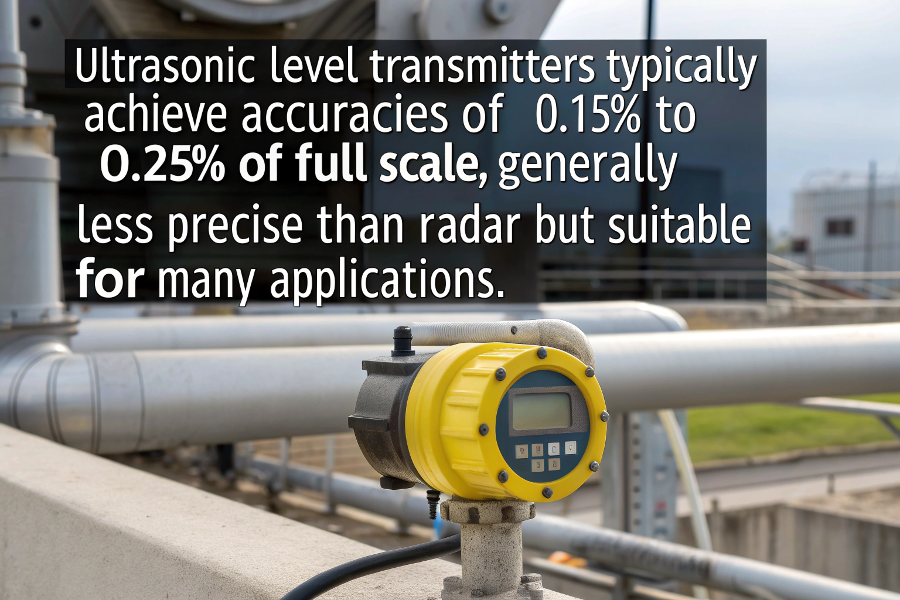
Ultrasonic Level Transmitter Accuracy
Here’s what I’ve learned:
Ultrasonic Performance
Accuracy Factors
Factor Impact Consideration Temperature Speed of sound Compensation Atmosphere Signal path Environment Distance Signal strength Range limits Surface Echo quality Application Technology Comparison
- Cost differences
- Application suitability
- Maintenance needs
- Installation requirements
Selection Criteria
Application Factors
- Process conditions
- Accuracy needs
- Budget constraints
- Maintenance capability
Technology Benefits
- Non-contact measurement
- Simple operation
- Cost-effective
- Easy maintenance
Understanding both technologies aids selection.
How to Calibrate a Radar Transmitter for Best Accuracy?
Proper calibration is crucial for achieving specified accuracy.
Accurate calibration involves setting reference points, configuring parameters, and validating measurements across the operating range.
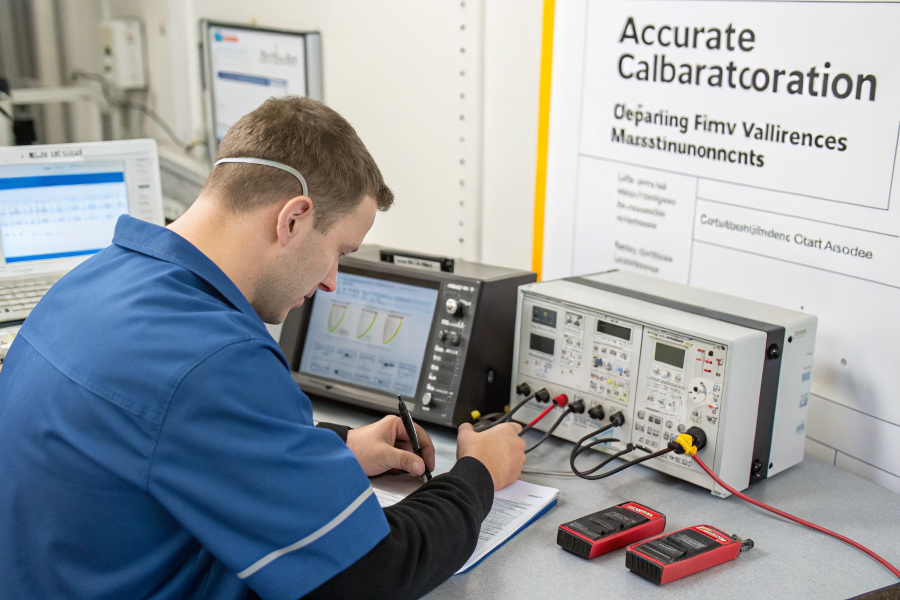
Radar Calibration for Accuracy
From my calibration experience:
Calibration Steps
Basic Setup
Step Purpose Impact Zero point Reference Offset Span setting Range Scale Tank geometry Mapping Accuracy Echo mapping Interference Quality Advanced Settings
- Signal processing
- False echo handling
- Output scaling
- Alarm configuration
Verification Process
Accuracy Checks
- Multiple point testing
- Repeatability verification
- Environmental effects
- Documentation
Ongoing Maintenance
- Regular validation
- Parameter review
- Performance tracking
- Adjustment needs
Proper calibration maintains accuracy.
Conclusion
Radar level transmitters offer excellent accuracy when properly selected, installed, and maintained. Understanding their capabilities, limitations, and calibration requirements ensures optimal performance in your specific application.