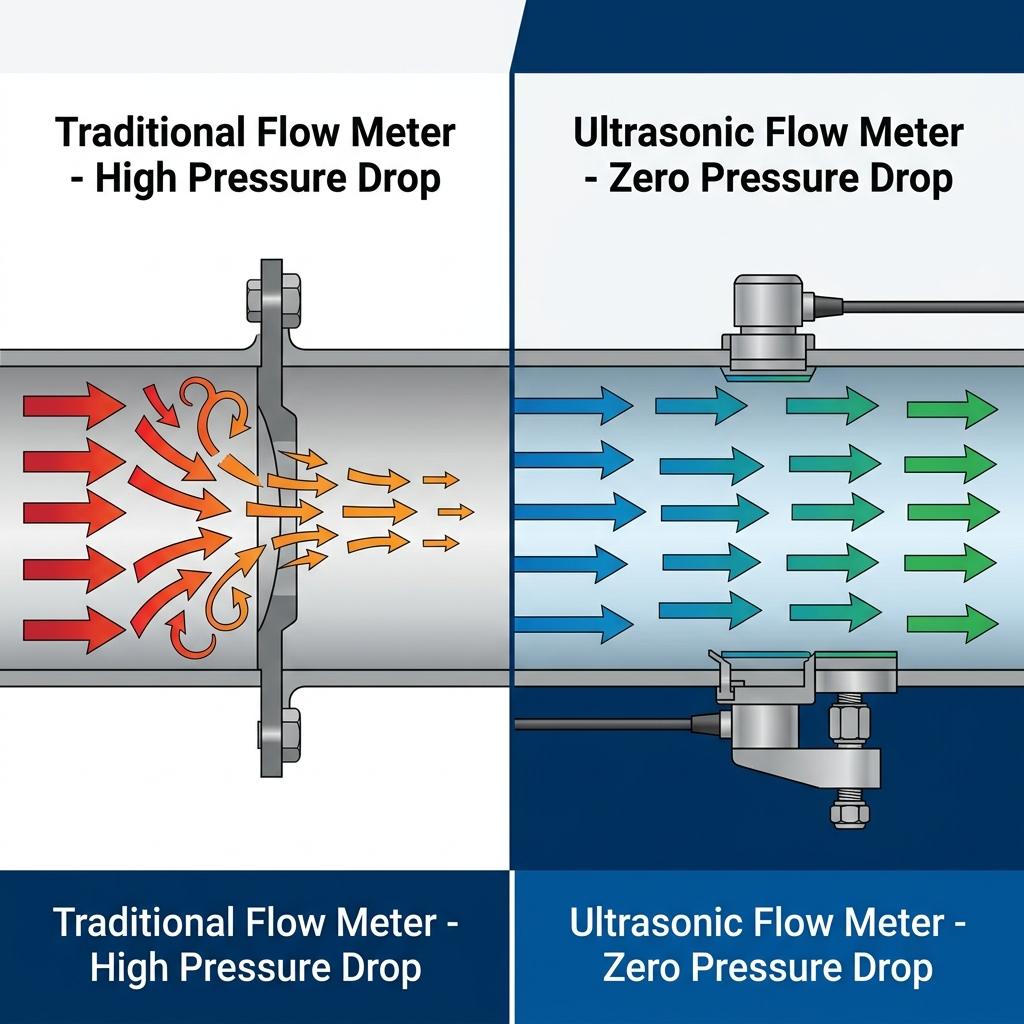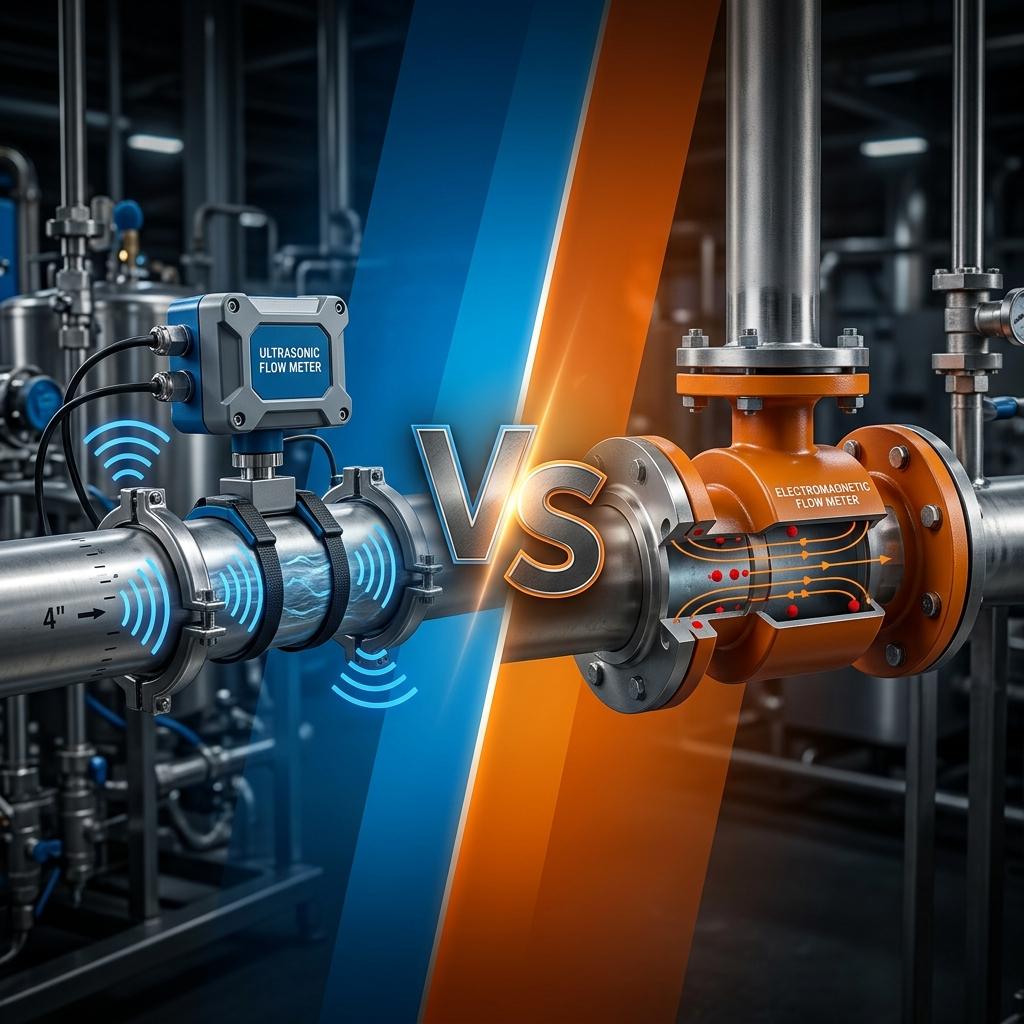
When your sewage pump station suddenly records a 30% flow discrepancy, it’s often traced to selecting the wrong flow meter technology for the harsh sewer environment. Choosing correctly can reduce maintenance costs by 40% while improving accuracy.
The 5 main flow meter types for sewage are: magnetic (handles solids best, ±0.5% accuracy), ultrasonic (clamp-on for easy install, ±1-2%), differential pressure (low-cost but clogs, ±3%), vortex (no-moving parts, ±1.5%), and Coriolis (most accurate but expensive, ±0.1%). Magnetic flow meters dominate 65% of sewage applications globally due to reliability.
Sewage Meter Comparison
What Are the Three Main Types of Flow Meters?
Traditional classifications oversimplify sewage meter selection. While many cite mechanical, electronic, and inferential types, sewage applications demand more specific technology matching.
**For sewage, the three functional categories are:
- Full-pipe meters (magnetic, Venturi) – Need 100% full pipes
- Open-channel meters (weirs, flumes) – For gravity sewer lines
- Clamp-on meters (ultrasonic) – Non-invasive installation**
Why Standard Classifications Fail for Sewage
Typical industrial categorizations don’t reflect sewage challenges:
| Conventional Type | Sewage Limitations | Better Alternative |
|---|---|---|
| Turbine | Clogs with rags in 3 months | Magnetic |
| Orifice Plate | Solids build-up in hours | Doppler Ultrasonic |
| Positive Displacement | Grit destroys gears in weeks | Non-contact Radar |
Case Study: Tokyo Water Authority switched 1,200 turbine meters to magnetic, reducing maintenance from weekly to annual while cutting meter errors from 8% to 0.8%.
Which Flowmeter is Best for Sewage Measurement?
Not all meters survive sewage’s cocktail of grit, grease, and rags. Milwaukee’s wastewater plant tested 7 types before standardizing on ceramic-lined magnetic meters after initial ultrasonic failures.
Top sewage meter recommendations:
✔ Magnetic Flow Meters – Best all-around (75% of sewage apps)
✔ Doppler Ultrasonic – For partially-filled pipes
✔ Venturi with Cleanout – High-temperature sludge lines
✔ Non-contact Radar – Extreme grease build-up areas
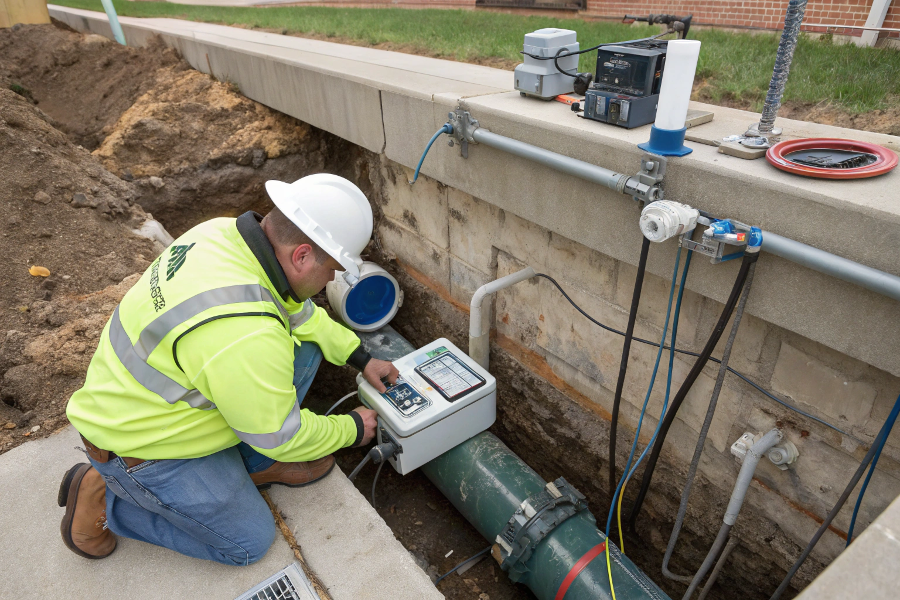
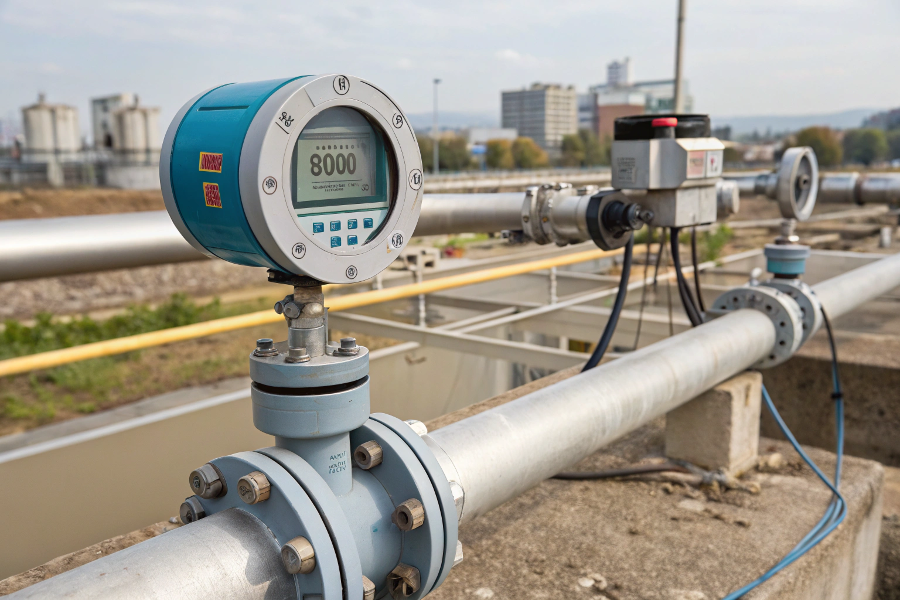
Meter Installation
Application-Specific Selection Guide
| Sewage Condition | Recommended Meter | Why | Avoid |
|---|---|---|---|
| Raw sewage with solids | Magnetic with liner | Handles 15% solids | Turbine |
| Greasy wastewater | Radar level + flow | Unaffected by buildup | Orifice |
| Low conductivity | Ultrasonic transit-time | Works with clean water | Magnetic |
| Sludge pumping | Coriolis | Measures density too | Vortex |
Singapore’s PUB Water Agency achieved 99.98% data reliability using this selection matrix across 3,200 monitoring points.
What Are the Five Primary Flow Meter Types?
Beyond basic three-type classifications, modern sewage systems use five distinct meter technologies, each with cost/performance tradeoffs.
Detailed comparison of all five types:
Magnetic Induction
- Pros: No moving parts, handles solids
- Cons: Needs conductive liquid (>5µS/cm)
- Cost: $$$
- Pros: ±1% accuracy, bi-directional
- Cons: Foam/scum affects readings
- Cost: $$
Differential Pressure
- Pros: Simple, well-understood
- Cons: High maintenance, clogs
- Cost: $
Vortex Shedding
- Pros: No calibration needed
- Cons: Limited turndown (10:1)
- Cost: $$
Coriolis Mass Flow
- Pros: Measures density & flow
- Cons: High pressure drop
- Cost: $$$$
Total Cost of Ownership Analysis (10-Year)
| Meter Type | Purchase Price | Installation | Annual Maintenance | Accuracy Loss/Yr |
|---|---|---|---|---|
| Magnetic | $6,500 | $2,100 | $400 | 0.1% |
| Ultrasonic | $8,200 | $1,500 | $850 | 0.3% |
| Venturi | $3,800 | $3,000 | $1,200 | 0.7% |
| Vortex | $5,600 | $2,400 | $600 | 0.4% |
| Coriolis | $12,000 | $3,500 | $300 | 0.05% |
Los Angeles Sanitation District saved $2.3M/year by switching from DP to magnetic meters basin-wide.
What Are the Five Units for Measuring Flow Rate?
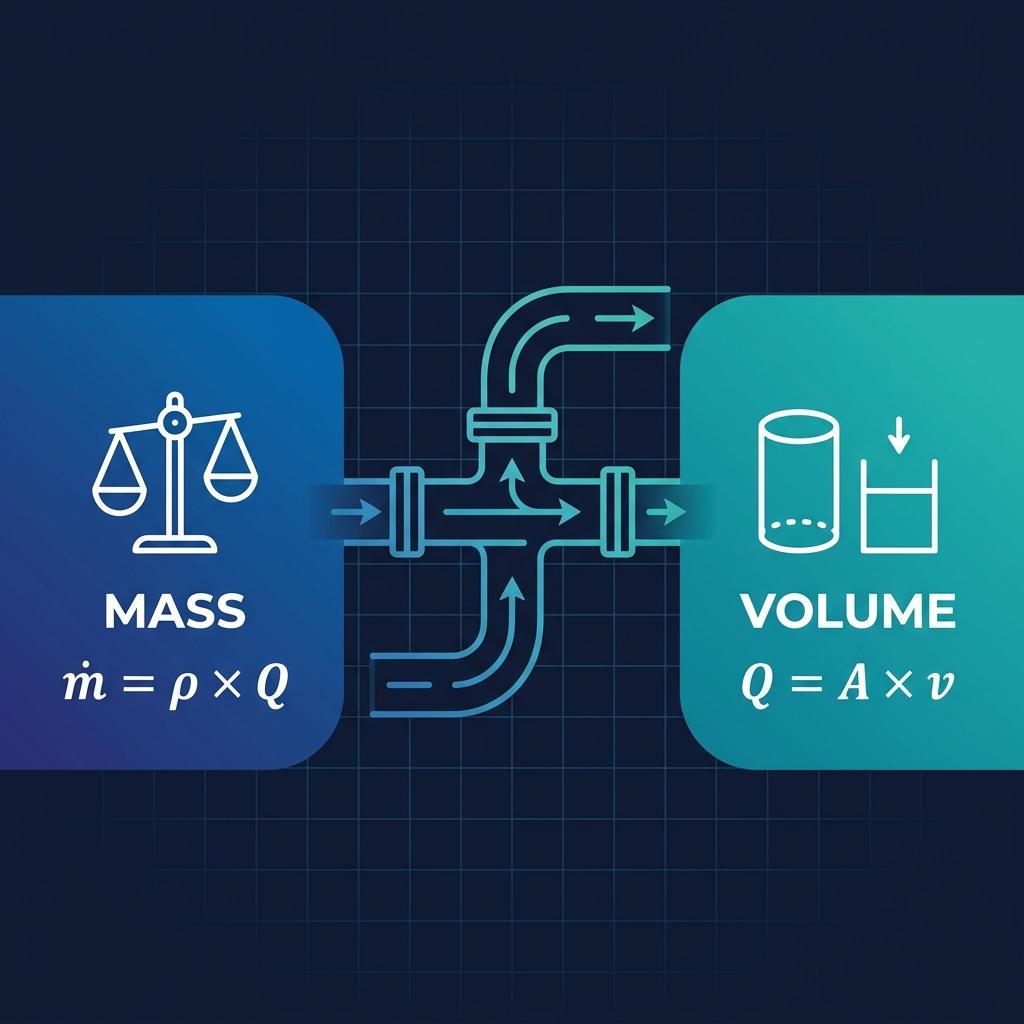
Engineers often confuse volumetric vs mass flow units, leading to calculation errors—like when Detroit’s plant oversized pumps by 20% using wrong units.
Essential flow measurement units:
Volumetric Units
- GPM (gallons per minute) – US standard
- LPS (liters per second) – Metric
- MGD (million gallons/day) – Plant capacity
Mass Flow Units
- lb/sec (pounds per second) – Sludge
- kg/h (kilograms/hour) – Chemical dosing
Velocity Units
- ft/s (feet per second) – Pipe sizing
- m/s (meters per second) – Scour prevention
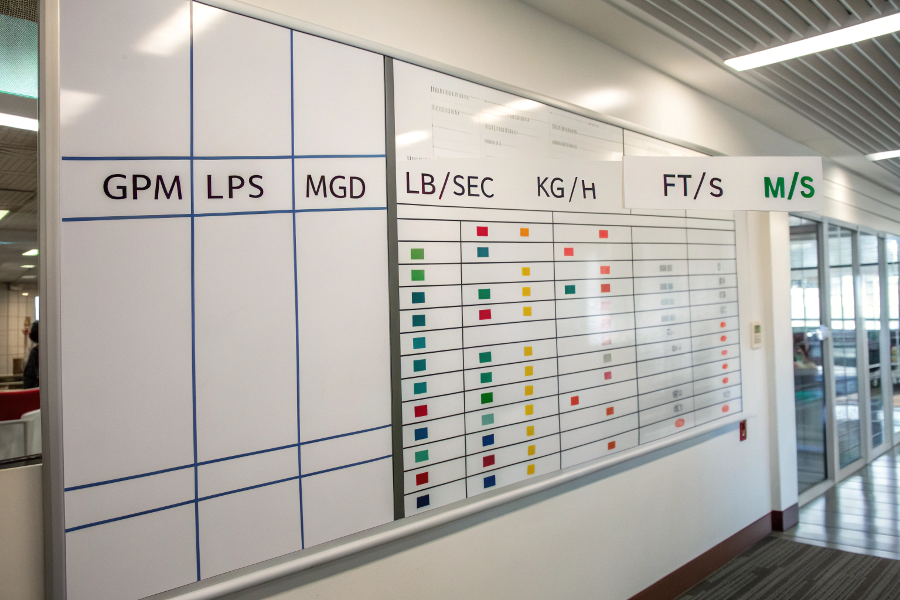
Unit Conversion Chart
Unit Conversion Challenges
Critical sewage thresholds:
| Parameter | US Unit | Metric Unit | Conversion |
|---|---|---|---|
| Minimum scouring velocity | 2 ft/s | 0.6 m/s | 1 ft/s = 0.3048 m/s |
| Peak wet weather flow | 15 MGD | 56,781 m³/d | 1 MGD = 3,785 m³/d |
| Chemical dosing | 50 gpm | 189 L/min | 1 gpm = 3.785 L/min |
Houston’s Northeast Plant avoided a $800k overflow event by correctly converting MGD to LPS during a rainstorm.
Conclusion
Selecting sewage flow meters requires matching technology to specific waste stream characteristics—magnetic meters lead for reliability but ultrasonic and radar fill critical niches. Always verify measurement units to prevent costly design errors.